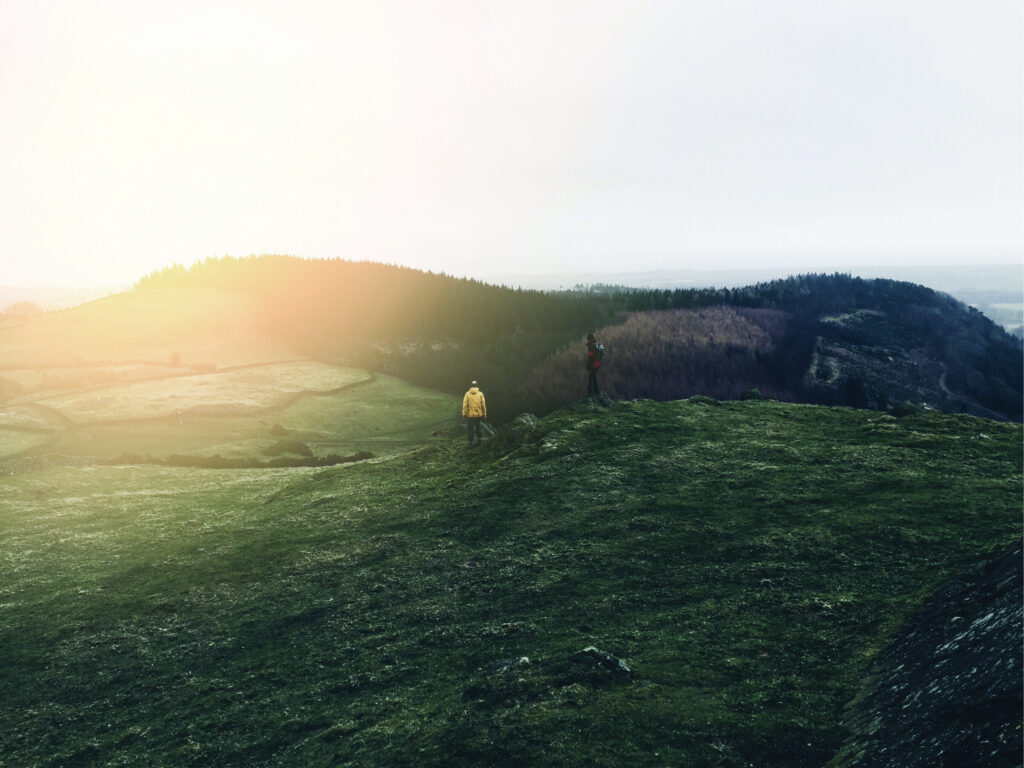
The Kinder Trespass
How a mass uprising led to the creation of the UK's national parks and legalized the right to roam
Humans have wandered what is now known as England’s Peak District for nearly seventeen thousand years, but by 1920 only twelve hundred acres out of an estimated one hundred fifty thousand acres of moorland and mountains were open for public access—just one percent, or about a Central Park and a half. The terrain was bad for farming, good for hunting birds, and great for what the British call rambling, or hiking, and that was about it. Still, landowners didn’t want people on their land, even if it sat untouched most of the time. Kinder Scout, a moorland plateau and crown jewel of the area, for example, was owned by the Duke of Devonshire, yet was used just twelve days a year, for grouse hunting, but was closed to the public. In the entire area, there were only a dozen hiking trails available for rambling.
This was a problem. The nearest large city, Manchester, was grimy and polluted, and unemployment was high. For recreation, factory workers and laborers looked to the mountains, which were clean and empty, and by 1932 about fifteen thousand blue-collar ramblers were heading to the hills—to those dozen trails—every Sunday. Inevitably, hikers spread out and some wandered or deliberately walked onto private land, where they were chased by gamekeepers with sticks and guns. Also a problem.
The aristocracy viewed the ramblers, who had little money and often dressed for hiking in tattered, secondhand military clothes, as dirtbags. The ramblers looked at the landowners as greedy interlopers and argued that the terrain should be open to all. As a backdrop, Manchester was a hotbed of socialist and communist sentiment, and many of the city’s rambling clubs were associated with socialist or communist organizations—not only did the ramblers want the right to walk wherever, some of them questioned whether land should be owned at all.
Into this scene stepped Benny Rothman, an unemployed mechanic and young communist, who organized what the British call a direct action. Under the aegis of the British Workers’ Sports Federation, he rallied a group of hikers to descend en masse on Kinder Scout on April 24, 1932, with the idea that gamekeepers couldn’t possibly catch them all. About four hundred of them scrambled up Kinder Scout from the Bowden Bridge quarry and were met at the top by another rambling group. Gamekeepers did indeed give chase, wielding sticks, and one of them was hurt attempting to stop the crowd. The ramblers got away, but later Rothman and five others were arrested.
At the trial, he argued, ”We ramblers, after a hard week’s work, in smokey towns and cities, go out rambling for relaxation and fresh air. And we find the finest rambling country is closed to us…Our request, or demand, for access to all peaks and uncultivated moorland is nothing unreasonable.”
His plea fell on deaf ears. Five of the six men were convicted of unlawful assembly and breach of the peace—trespassing wasn’t illegal, ironically—and they were sentenced to serve two to six months in prison. It was a shocking and vindictive verdict, and the public was appalled. Even those who’d opposed the Kinder trespass were against such a stiff penalty, and a few weeks later, spurred by the cause, ten thousand ramblers gathered to rally for access to the land.
The widespread support was nice, but it took seventeen years for real change. Only after the Labour party won power did England legislate the creation of national parks, in 1949. The first one established? Peak District National Park, which included access to Kinder. But another fifty-one years passed before the U.K. codified the rights for ramblers to roam wherever they liked (within reason, and with limits), through the 2000 passage of the Countryside and Rights of Way Act.
Two years later, the 11th Duke of Devonshire, the grandson of the duke during the Kinder trespass, apologized at the seventieth anniversary gathering of the mass protest. “I am aware that I represent the villain of the piece this afternoon. But over the last 70 years times have changed and it gives me enormous pleasure to welcome walkers to my estate today. The trespass was a great shaming event on my family and the sentences handed down were appalling. But out of great evil can come great good. The trespass was the first event in the whole movement of access to the countryside and the creation of our national parks.”
Benny Rothman, activist to the end, lived to see the groundbreaking legislation. He died at ninety-one, in January 2002, two years after parliament said he was free to roam where he wanted.
Photo by Luke Porter