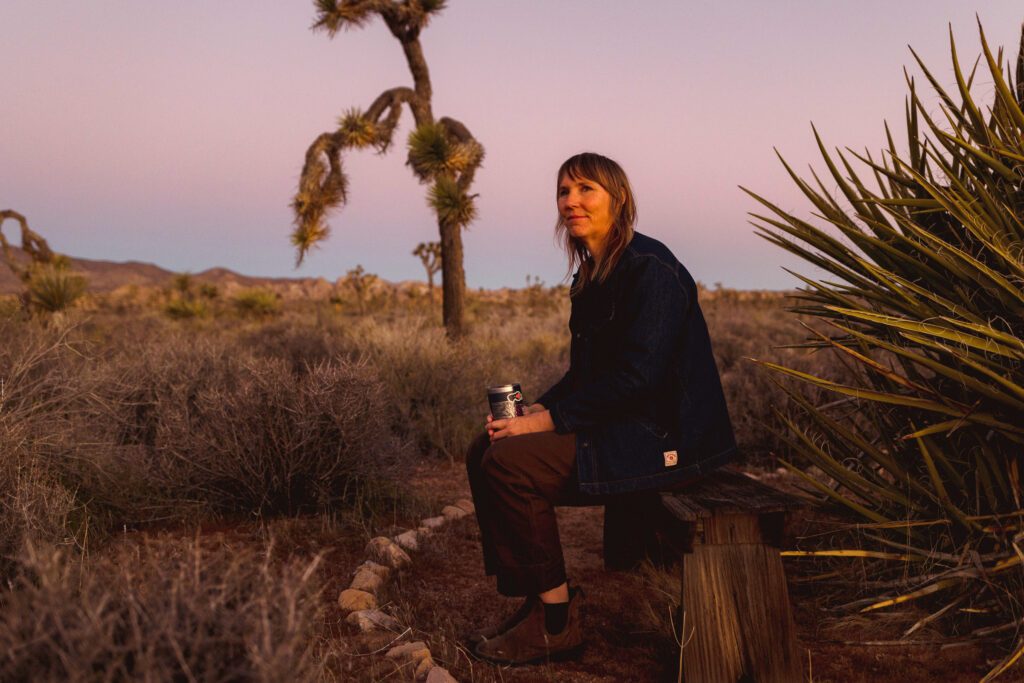
Kelly Herbinson Is Saving the Desert and Its Critters
Kelly Herbinson is the executive director of the Mojave Desert Land Trust, one of the primary NGO activist groups in Southern California, and critically important for preserving Joshua trees and desert tortoises and all kinds of things. The Mojave is a microcosm of a lot of what we’re struggling with in the world today — renewable energy, and where we put it. Kelly is at the forefront of that.
I love what MDLT does, and I want to know more. A lot of people reading this are mountain-based, a lot are coastal-based. I fell in love with the desert, but not everybody is in love with it. It’s historically been considered a wasteland. So let’s start with a simple one: why should we care about the desert?
That is one of my favorite questions. I grew up on the coast, south of Los Angeles, and really never came to the desert as a kid. I became a field biologist out of college, and one of my first jobs was working in Barstow, an interesting town in the desert — I’ll leave it at that if you’re passing through. I remember showing up on my first day of work in my little pickup truck and just crying on the sidewalk, because I was like, what have I done, this place is uncomfortable. I’d been working in Montana for a while.
So I understand most people’s basic understanding of a desert. The word desert basically means an absence of life, right? So we have this reputation issue we’re always up against, because that’s the opposite of what a desert is. The desert region of the Southwest is pretty big — a big part of our country. A quarter of the state of California is desert. We have the Mojave Desert up north and then the Colorado Desert in the south, which turns into the Sonoran Desert in Arizona. It’s one of the most biodiverse regions we have, and one of the last remaining mostly intact ecosystems in the lower 48 states. It hasn’t been overly developed because we don’t have much water. But a lack of water doesn’t mean a lack of life — it’s kind of the opposite. Because there was a lack of water, all the species that live here had to adapt and evolve ways to live without it. There are lots of species we say are endemic, meaning they live here and nowhere else on the planet, and they have really cool adaptations to a landscape that’s relatively harsh and hot and dry. We only get about four inches of rain a year in the Mojave, for example. But it’s teeming with life — it’s just all kind of secret and hidden and scaly and spiny.
And it’s those mean old mountains that take the water, right? Most of the world’s deserts are rain-shadow deserts — storms come in, the high mountains steal the rain to store as snow, and on the other side, in the rain shadow, we’re left high and dry.
That’s exactly right.
So it’s probably a blessing that the desert has been considered a wasteland for so long, because you end up with these huge tracts that are untouched. You said it’s one of the last large untouched ecosystems — give us a sense of the size. You were in Montana, and people think of the inner-mountain areas as untouched, but the desert makes a good run for it.
You’re right. I believe almost all of Nevada is desert. In California it’s about 25 percent of our state, which is 25 million acres. I don’t know the size throughout the United States, but I’m guessing 50 to 80 million acres. It’s huge. It’s bigger than some countries.
So we have the desert, and we have MDLT. How long has MDLT been around, and what’s your primary mission?
We organized in 2006. It was started by a group of local community members in Joshua Tree who were fighting against a development slated to go in. We pooled together resources and blocked a big housing development. I joined as a board member in 2013, and we had one employee back then. Now there are 34 of us. Our mission is protecting the entire California desert region for its natural and cultural values — working to protect the desert ecosystem as a thriving, functional, biodiverse region for all the wildlife and people that live here.
Just a small thing.
No big deal.
Do you have a sense of the population of this desert area — how many people live there? Southern California is what, 25 million now?
That’s a good question. In the California desert it’s probably a million people, spread out through a big area.
So next year is 20 years and lots of growth. In that initial battle, was the solution to acquire the land from the developer?
Yes. This is one of those great stories where the community came together and made it very difficult for the county to approve the development, and then we raised money to buy it. That was so effective that we kept doing it. Originally we were very locally based in Joshua Tree, but over time we expanded our mission, and we attracted a couple of big donors early on who were really interested in that work, which gave us a runway to just go for it.
I read the National Park-sponsored history of Joshua Tree National Park, which is eye-glazing. But what’s interesting — and people probably don’t appreciate this about national parks — is how complicated and controversial the creation of them and their borders is. Almost every national park in this country has had people fighting for it not to be there. In the case of Joshua Tree, there were so many inholdings of private land from railroads and others, and there still are. You think, national park, one big parcel of land — and that’s not the case at all.
You’re exactly right. People don’t realize how much private land remains inside national parks, and that’s a big part of what we do. With Joshua Tree specifically, we’ve acquired more than half of the inholdings that were left, cleaned them up, and conveyed them to the national park. We’ve done this both in Joshua Tree National Park and the Mojave National Preserve — between the two, we’ve acquired, cleaned up, and conveyed close to 60,000 acres.
That’s a lot. I was looking at your numbers — so far you’re up to over 125,000 acres acquired, and 60,000 conveyed to public lands. That’s more than any other NGO, I think.
I think we’ve conveyed more land to the National Park Service than any other NGO in the last 20 years.
Kudos. What is that process like? I’m guessing you have parcels you’ve identified — give me a sense. What’s the targeted list and the ongoing negotiations?
Another interesting thing about our desert region is that it’s largely owned by the federal government. Almost all of the land is either part of our three national park units, our five military installations, or Bureau of Land Management public lands — we have a couple of BLM national monuments. So a lot of what we do is work closely with the federal government, supporting their conservation lands, and building bridges or corridors between all those protected units. If you think of our national parks and monuments like organs in a body, it’s really important they have connections, arteries, so wildlife can migrate between units, and for more science-y stuff like gene flow. So we work very closely with the Park Service, the BLM, and the Department of Defense. A lot of times the national parks will tell us what they’re interested in. It’s really hard for them to acquire land — much easier for a group like us to acquire it, clean it up, and convey it.
Why is it easier for you, a private group?
There are a lot of complicated reasons, but everything in the federal government moves very slowly.
Or did.
I know. There’s obviously an elephant in the room as I talk about how closely we work with the feds, which I’m sure we’ll get to. But it moves at a snail’s pace for them to get funding to expand, and certainly to expand their boundaries. One thing we did was work with Joshua Tree National Park on a congressional act to expand their boundary to incorporate some land we’d purchased around the outskirts. Usually we’re in regular discussions, and they’ll say, hey, there’s this old mine here, can you clean that up for us? It’s really hard for them to get funding to restore land or clean up big hazardous waste messes, and we can do that. We have a dedicated funder who specifically helps us with that program — someone who believes in protecting wilderness, deep wilderness, really important bighorn sheep habitat or mountain lion corridors where there’s maybe some defunct mining operation. We’ll go in and clean that up in a way they just wouldn’t be able to get the resources to do. We often don’t realize how under-resourced our national parks are.
The last I saw, the backlog of maintenance was like $13 billion. They’ve made some improvement, I think.
I believe it.
Infrastructure, roads, all kinds of things. So with these wilderness areas — you’re not allowed to use any kind of mechanism, no cars, no chainsaws. How do you get into those places and clean them up? Do you have to do everything by hand?
Most of the land we acquire is pretty straightforward to get to. Occasionally there’s a deep wilderness pocket that requires some heavy lifting, and we find a way. We often hire incredible crews of people who do this for a living.
AKA interns?
No, very well-paid strike teams that go in and clean up property in the middle of nowhere, and they’re used to it and they love it.
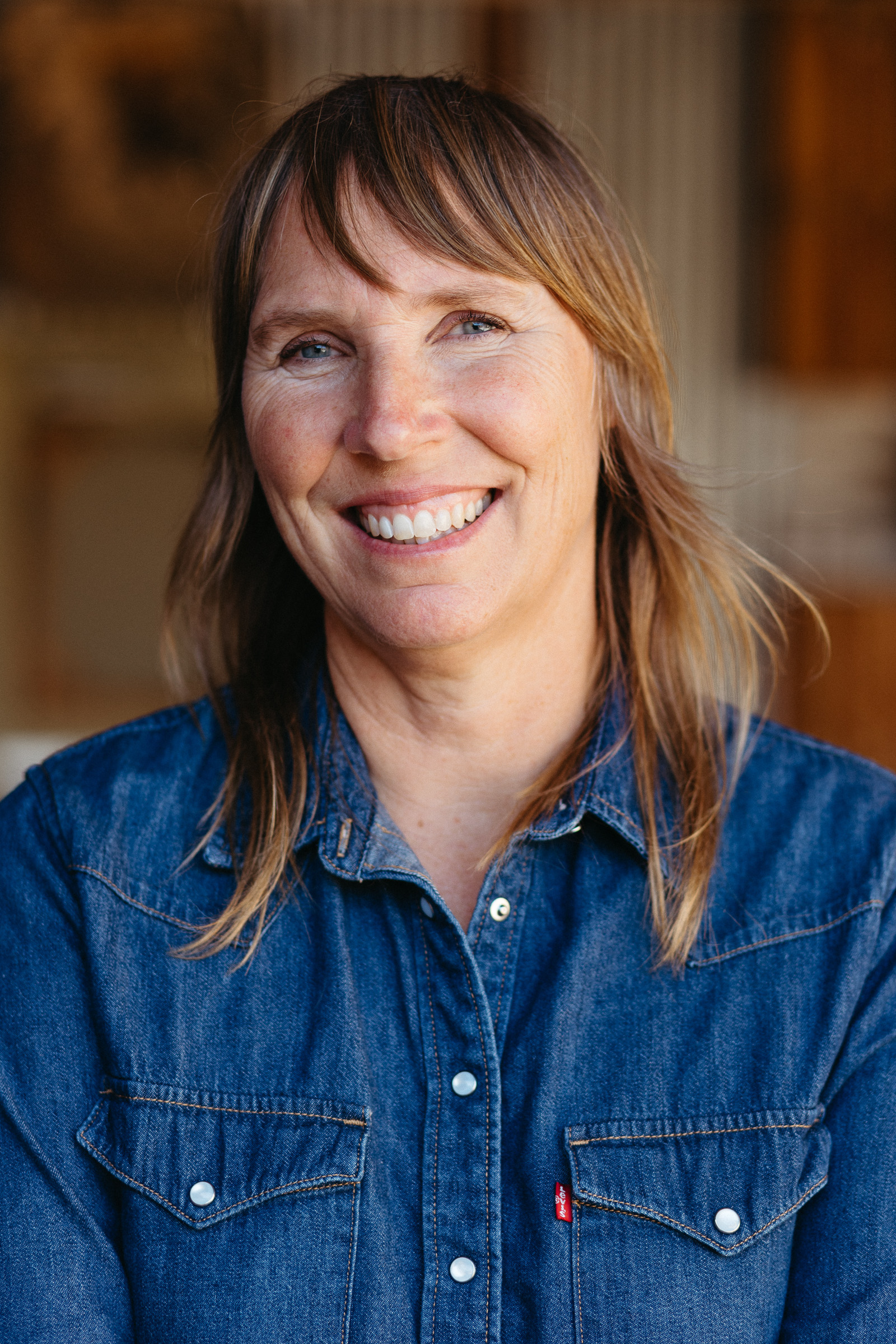
That sounds pretty rewarding — the sense of seeing a place restored.
I sometimes wish that was my job, instead of sitting at a desk all day.
I don’t think anybody who works at an outdoor NGO wants to be in the office all day. What’s the fastest you can move? If you identify a parcel, how long do these things typically take — to acquire, restore, and hand over?
It’s not fast. We have one funding mechanism that’s a pretty well-oiled machine at this point, so it’s quick for us to acquire stuff. But almost always the process of cleaning it up takes time, and then it can take years for the agencies to accept it. We have property we’ve been sitting on for 10 years. The federal government has to get money through the Land and Water Conservation Fund — a congressionally delegated fund specifically for the federal government to acquire land — in order to buy it from us. So sometimes that’s the slowest process, but it usually takes at least a couple of years.
That fund, for folks who don’t know — the primary driver comes from fees or taxes on extractive industry, fossil fuels, and then it’s a payback to acquire and preserve more land. For many years there was never any certainty whether it would be funded, and I think Congress finally permanently funded it. Is that right?
That’s right. Nothing’s ever permanent, but that’s the idea. The Land and Water Conservation Fund and the National Park Service have always been very universally supported, with extraordinary bipartisan support — it’s one of the few places we’ve all agreed on. So in general it fares well. But recently there was a movement to remove the funding for the Land and Water Conservation Fund — this was even before President Trump took office — and that was overruled. I’m expecting it’ll come under attack again sooner than later.
I do remember what I was discussing with Adam Cramer, which was facts versus stories in trying to change minds, and the incredible return on investment from national parks and public lands. In a time when they’re talking about running the government like a business — for national parks, the return is something like 14 times. For every dollar spent, you get something like $14 in economic creation. It’s astounding. So I find it frustrating that they’re so woefully underfunded when it benefits everybody, especially rural communities, which are often the gateways to national parks.
So let’s talk about critters. You talk about corridors — are there any seasonally migratory animals in the Mojave?
Certainly birds, lots of them. There’s a whole flyway through the desert, so we see a lot of migratory birds. And there are species that move around — bighorn sheep will seasonally migrate from place to place. But other than that, it’s mostly birds.
And a lot of them are passing through. So the corridors are less about herds of antelope, which you don’t have, and more about sustainable genetic populations — making sure there are enough folks in the club.
Yes. It’s a complex thing with wildlife corridors. It’s easy to imagine migratory animals, but think about it like this: imagine if the city of Los Angeles was totally cut off from San Diego — to be very California-centric. We want to mingle with our fellow humans, and it’s the same for animals. They have complex social structures and foraging methods, and especially in the desert — and this was largely true even for humans historically — resources are so sparse that animals need to move from place to place to get everything they need. They need to access their summer watering holes versus their winter watering holes, and interact with different populations. Largely it’s just the edges of populations being able to mate, so you don’t have islands of critters interbreeding, which we all know ends poorly for all species. So this way they continue all that genetic mixing that’s really important for biodiversity to thrive.
Anybody who lives in Los Angeles and has met somebody from the East side and somebody from the West side — it’s a deal-breaker, because there’s no corridor fast enough to get you across the city. So the East side and West side are each interbreeding with themselves. So you’re a biologist, and your specialty is?
It’s a complicated question. I worked with desert tortoises most of my professional life — I was a field biologist studying tortoises — but I actually went to graduate school to study ants.
I did not know that.
So I have a large volume of knowledge about ant behavior.
So E.O. Wilson was your inspiration.
Yes. And I got to meet him a couple of times. He was an incredible person.
We tried to do an interview with him, in his last years, and unfortunately… but yeah, incredible. So I served up that question to talk about tortoises, but now we’ve got to talk about ants. Why ants?
They’re the best. I kind of joke about studying ants because it sounds so random and weird. I went to college and double majored in ecology and women’s studies, and I was really into looking at the different ways gender appears in nature. And I learned about ants. I don’t know if you know this, but all ants, bees, and wasps have all-female societies. I’m about to blow your mind — they’re all-female societies. Males are only born once a year to mate, and then they die immediately.
I like this. Sorry, dudes, but we’ve had our shot.
When I was 19 I thought that was really cool. I still think it’s cool. They have these really interesting, highly social societies set up in an extraordinary way. And there are ants in every single ecosystem on the planet. They’re hyperdiverse — we’ve described about 13,000 species, but there’s probably far more. And in reality, if you want to know how an ecosystem functions, you have to know how the ants function. They’re the secret underground workers taking care of business in every ecosystem. And they just so happen to all be female.
What do you mean by taking care of business? What roles are they playing?
They provide lots of services. In the desert, we have those big red harvester ants — you’ve seen them. They’re seed harvesters. There’s the big red seed harvesters and the big black seed harvesters, two big groups in the desert, and they’re the main way a lot of our native plant seeds are dispersed. They eat the seeds, collect them, bring them into their nests, and along the way they drop some, or it gets lost in the wind. They’re moving tons of native seed around the desert every day, mostly undetected. A lot of ants also help pollinate plants, on accident or on purpose. They’re a big source of food for a lot of creatures. One of my favorite species is the honeypot ant. Have you heard of these?
Well, I’ve heard of honeypots.
These are adapted to really arid climates — we have them here, and they exist in Australia and other arid places. There’s a whole caste of the ant who have abdomens that can expand to little pea-sized water balloons. They’re nectar eaters, so in the springtime they eat as much nectar as possible, and that caste becomes basically like little mini-refrigerators — their abdomens swell to the size of a pea of sweet liquid, and they hang off the roof inside the ant hills. There are these galleries of them, and they hang out all winter and summer. And if another ant is hungry when there’s no food outside, they just tap the shoulder of a honeypot ant, and that ant throws up in its mouth and feeds it.
It was pretty amazing up till that last one.
And that’s how they live.
That’s insane.
They were a really important food source for lots of animals — animals dig up honeypot ants and eat them. Humans historically would dig them up and eat them. I’ve eaten them. They’re not delicious.
Not sweet?
No. But I can see, in a pinch, if you need some food in the desert.
I kept thinking about Winnie the Pooh the whole time. I know honeypots from spy novels — a honeypot is a sexual trap. So if you have a disgruntled ex-federal employee you’re trying to reel in to spill National Forest Service secrets, you’d trap them with an enticing honeypot, honey trap.
Interesting.
All right, I hate to take you off ants, because it’s so fascinating, but let’s go to our little megafauna, the tortoises, because it’s such an indicator species, so critical and endangered. Tell us about desert tortoises, and give us an assessment not just of where they are, but of the ecosystem — what challenges is the desert facing, seen through the lens of a desert tortoise?
It’s not an uplifting story, unfortunately. Desert tortoises are the one tortoise species that lives in our desert region. Within the last 75-ish years, their numbers have dropped by probably about 90 percent. And it’s interesting, because anyone who’s spent time in the desert knows there’s a lot of desert left — it’s still one of the largely intact ecosystems we have. So why did their numbers decline so rapidly? I’ll pause to say, turtles and tortoises in general are a wonderful indicator group. They tend to be pretty vulnerable to changes in their habitat, and they’re actually the second most imperiled group of species on the planet, second only to non-human primates like chimpanzees. So they’re great indicators of our global health, and our desert tortoise is no exception. It’s declining rapidly.
There are lots of reasons. The biggest one — even though we still have a lot of space, the habitat loss has been catastrophic. We’ve had a lot of development, towns expanding quickly in the last couple of decades, especially Las Vegas. And renewable energy development, which is a whole other complicated subject — a lot of these big projects have been installed in places with a lot of tortoises and taken out big pieces of their habitat. And then drought. We’re in a very long, prolonged drought related to climate change. When you have very little water to begin with, and then you reduce that for even a couple of years, it decimates the population. And the interesting thing is, even if the tortoises make it through, the bunnies don’t. And what happens if the bunnies don’t make it? The coyotes are really hungry. So something called prey switching happens, where coyotes switch from bunnies, which are no longer prevalent, to tortoises — not their favorite meal, because they’re hard to eat, but they’ll annihilate them if there aren’t any rabbits. Then you have invasive species — non-native plants all over the place now, thriving in a way our native plants can’t, and the tortoises either can’t eat them or they have no nutritional value or actually cause harm. And ravens, which is a really interesting parable. Ravens are a native species in the desert — they’re supposed to be here — but historically they could only nest in mountains and big trees, which are in very specific places. Now, ravens are, I think, 7,000-fold what they were historically. And ravens eat baby tortoises like cookies. They just snack on them all day. That’s been a huge issue.
They’re very smart, corvids. I was just talking to Tim Shields at the protest for public lands a few weeks ago — he’s a raven expert, and I think he works with you guys a bit. He was talking about how the ravens are nesting in utility poles. He’s been working on lasers and other options. So historically they nested where there were big trees, usually higher elevation, and now, because of the prevalence of utility lines across the desert, they have that foothold?
That’s exactly right. It used to be they’d find cliff sides to nest in, and now literally almost every single power tower in the desert has a raven nest. The entire desert is crisscrossed by transmission lines, so it created all this substrate for ravens to nest. Pair that with agriculture and towns giving them water and food, and they’ve exploded. And they’re huge predators of tortoises.
So is there anything within MDLT’s purview, other than land acquisition, directed at anti-raven options, or protecting the babies until they’re more mature — or is that outside your scope?
We don’t do any direct desert tortoise recovery other than acquiring land and restoring it — that’s the role we play. It’s a slippery slope; it’s hard not to get involved in all of it. But we partner with and support organizations that do that work. I’ve worked with Tim Shields quite a bit, and done raven work with him, and he’s got some really great technology. There’s also a desert tortoise head-starting facility at the Twentynine Palms military base, working on understanding more about that practice. One of the things we’re working on now — desert tortoises are so near and dear to my heart, and it’s been so brutal to dedicate your life to a species and watch it continue to be depleted. Even in the last 20 years, they’ve declined another 40 percent. It’s so painful to watch, and it’s very much my motivation to wake up every day trying to figure out how we stop this. Really trying to think outside the box about innovative, bold ways to attack these problems, because they’re immense. And it starts with protecting land and going from there. Once we have a piece of land, we’re in the process of working with partners to identify specific critical habitat for desert tortoises that we can really invest in. Once you have the land, you restore it, you control the invasive species, you control the ravens, you can bring new tortoises in. That’s our next phase — way more proactive management of the land.
I’m picturing those little vests they put on small dogs that look like porcupine vests. I’m picturing the little baby torts with their little steel shells.
They do.
So they’re incredibly adapted to a very low-water environment. When you start to learn about these creatures, some of them never drink water — they don’t need it. What are some of the tortoises’ unique adaptations to the desert?
Water is a big one. Tortoises are only really active for a short period in the spring and a short period in the fall — they spend 90 percent of their time underground, in burrows they dig, hanging out whenever it’s too hot or too cold. They come out to mate and eat a couple of times a year, and they get most of the water they need just from eating plants. And whenever it rains, even if they’re in their burrows hibernating, they can tell, and they’ll come out to drink. They’ll use their shells to make a little drinking depression in the ground to let water collect. They have lots of ways to get water into their bodies — they can snort it with their nose, they can drink it. And the other cool thing we can’t do is their bladder acts like a camel’s — they store water and reabsorb it if they need it. Once water makes it into our bladder, we have to get rid of it, but for tortoises it’s a holding tank. That’s why we always tell people not to pick up a tortoise if they see one, because they get scared and release the contents of their bladder. If that happens in July, before three months of dry period, they could die, because they may not have the resources to make it.
Do you know how they sense when it’s raining? Is it a change in humidity? If they’re hibernating, how do they sense it?
I don’t know exactly, but it’s some kind of barometric pressure change, is my guess. There’s a lot of research — we tend to wildly underestimate animals’ abilities, because we think about them through the lens of a human, and we don’t have a fraction of the physical abilities these species do. There’s been research on tortoises homing back to a place they found water at some point. Of course you’d have a species whose entire life — that’s been here for four million years — depends on getting the tiny bit of water that happens every year, being really good at sensing when it’s coming.
Especially when the margins are so thin. Can’t mess around.
No, no.
So let’s talk about the Joshua tree, which is definitely an indicator species for the Mojave, gives the park its name, beloved by influencers everywhere. What’s the state of the Joshua tree in the Mojave?
Unfortunately, also not an uplifting story, but an interesting one, and maybe something I’m optimistic about.
Before we go into the buzzkill part — I think this is the case with a lot of ecosystems right now. We’re facing unprecedented challenges; “unprecedented” is probably going to be the word of the year at the rate we’re going. But one of the things I’ve learned, especially in my time in the desert, is how many really smart and passionate people are working to solve these problems — people like those at MDLT, constantly in touch with the states, the feds, the universities. There’s this incredible network working together. So on the one hand, there are a lot of challenges; on the other, I’ve seen in person these amazing folks like Kelly who have devoted their lives to solving this. So that’s the context for talking about the Joshua tree.
I appreciate you saying that. In some ways I feel so lucky to live in a paradigm filled with incredible, smart, hardworking people who’ve dedicated their lives to protecting everything that’s good about the world, including people. And because of that, it gives me optimism and hope. I fully believe in the power of well-intended, hardworking people to persevere and make things good. And we know how to turn it around — it’s really a political-will issue at this point. We’re more powerful than we think.
So the Joshua tree is this extraordinary plant, endemic to the region — it doesn’t live anywhere else on the planet. It’s a special species of yucca, and I find it to be a really moving species to behold. It’s hard for plant species to migrate, so as the climate changes, it’s forcing a lot of our species to move higher up and further north to stay in their band of comfortable climate. Joshua trees are no exception. They’ve been here since the Ice Age, pretty much — they used to be way more prevalent when it was much colder. Their habitat has already shrunk quite a bit, because we’re naturally living in a warmer climate. They like a cooler climate, so if you look at the climate models predicting what it’ll be like 100 years from now, that climate would mean only about 1 percent of the Joshua trees we have today would be in suitable habitat. So we’re talking about almost a complete annihilation of the species due to climate change in the next 100 years or less.
However, there’s some really great science on identifying what we call climate refugia — areas where a Joshua tree will be able to survive and continue on 100 years from now in a different climate landscape. We’re really working to identify and protect those at all costs, so we can maintain Joshua trees moving forward.
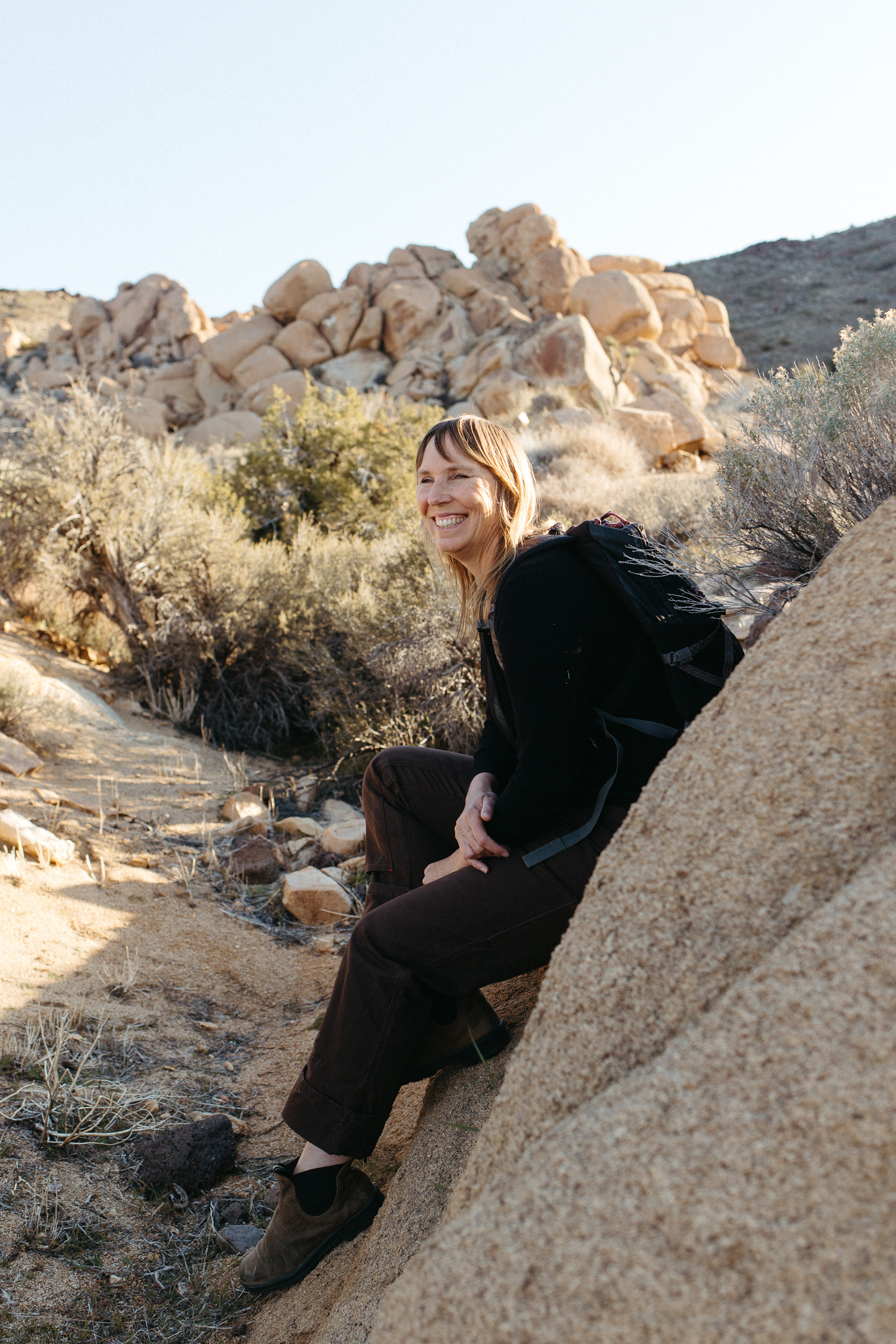
So does that come into play as you consider what land to acquire? Are you looking increasingly to the north and higher?
We’re looking at a lot of things. We’re constantly pivoting our conservation strategy based on what Joshua trees need, what desert tortoises need, where the wildlife corridors will need to shift over time. But climate is the big driver, because it makes it a moving target. And it brings the question of assisted migration — will there be a point where we actually go and plant trees in better areas? That’s certainly possible, but no one has really started doing that yet. One of the things we do at MDLT is run a big native plant nursery, where we grow native plants for restoration, but we also have a big conservation seed bank. We’re collecting Joshua tree seeds, and seeds from all the species in the desert, and banking them so we have the genetic material to think about all these tools moving forward. Planting Joshua trees is certainly an option.
The seed bank is something I’m really excited to talk about, because it’s a very positive, proactive story. Can you give me a history of it, where it is now, and your vision going forward?
Seed banking is something people have done for a long time, in different ways — we’ve been doing it since humans started agriculture. But nowadays, because we’re looking at all this loss — climate destruction, habitat loss, a significant uptick in wildfires, which surprises people even here in the desert, where we’re seeing big, extreme wildfires demolishing millions of Joshua trees at a time — one of the tools we came up with was banking seed in case we need it. There’s been this movement around the world to protect seeds for the future. Even the Bureau of Land Management initiated a big program called the Seeds of Success program. We started out small, with a couple of refrigerators filled with seed we collected on our land. That’s expanded significantly recently, thanks to a big grant from the state of California to become a regional hub for desert native seed. We’re working to bank seed from every species of native plant in the desert — about 2,500 species — so we have it in case we need it, and for basic restoration.
So do you have four refrigerators now? I’m thinking about the Svalbard seed bank, way above the Arctic Circle, and within the first decade or two there was this horrible melt that flooded it. It was so well-intended, and architecturally striking, and the symbolism of that… So when you sit down to do something archival, and these things are biological and living, holding the seeds of life — what’s the facility like? The specialized equipment?
Great question — this is also one of my favorite subjects. We’re in the process of building a big facility. We’re working with architects and engineers right now, and hoping to break ground later this year on a 3,000-square-foot, state-of-the-art seed-banking and processing facility. But right now we’re up to four refrigerators in an office — we’re in my office for a little while, at our headquarters in Joshua Tree. There’s a pretty involved process. Especially if you’re a gardener and you buy seed packets and plant them, I think we take for granted what seeds require to be banked for the long term. Especially desert seeds — almost all of them have some adaptation so they don’t just desiccate if you throw them out into the world; they’d die. So almost every species requires a specific way it needs to be nurtured to germinate. And there’s no book — it’s never really been written before. So a lot of what we’re doing is basically writing the handbook on how to collect, process, and germinate every species of native plant in the desert.
That’s so exciting. You’re sciencing on a daily basis. How often do you have an opportunity to create something from scratch like that, that feels so critical?
It’s so fun. We have all these scientific devices to try, like — okay, here’s the species. We always just try, okay, put it in the soil and see what happens. Oh, it didn’t grow. Let’s think about what this species might want. Sometimes it needs a certain kind of acid because it’s used to being digested by an animal before it germinates, or it might just like to be in a warm paper towel sitting on top of one of the refrigerators. Or — I was telling this story the other day — my seed bank manager was walking around the office rubbing his fingers together, and I asked what he was doing. He had a little piece of moist towelette imbued with the essence of fynbos smoke, which is a habitat in South Africa. South African fynbos is fire-adapted, so they actually manufacture these paper towels filled with fynbos smoke, specifically for germinating seeds that like smoke.
Talk about a specialized business.
So he was trying that to see if rubbing it in the smoke might help germinate the seed. We’re trying anything, and it works — we figure out the formula for every single species, and we’re documenting that and making it available.
You figure out the formula for all 2,500 species, or all that’s in your collection?
All that’s in our collection. We’re working on it.
How many in the collection now?
We’re up to close to 400 species, which doesn’t sound like a lot compared to 2,500, but it’s the main big common species you’ll find out there, the restoration heavy hitters. We just got this big grant to build out the program for the first time last year, so we’re just getting started.
Joshua trees are pollinated by a particular type of moth. How does the survivability and viability of the moth affect your seed collection? And one more question about Joshua trees — masting is when all trees flower at the same time. Is that how Joshua trees propagate?
Great question. The moth is a really important part of the Joshua tree. Joshua trees have what we call an obligate mutualism with a species of moth — they require one species of moth to pollinate them, and the moth requires one species of Joshua tree as its food source. They need each other to survive. Without one, you cannot have the other — which I was going to bring up when we talked about assisted migration. You’d also have to assist-migrate the moths. Interestingly, we know almost nothing about these moths. We know a little about their genetics — there are two species of Joshua trees and two species of moths, and we know where they live, but we don’t know much about their natural history or ecology. It’s a really understudied species, like a lot of insects. So I always tell people, if you like bugs, go study Joshua tree moths.
The Joshua trees flower, which doesn’t happen every year. It happens after a lot of chaos in their lives — they tend to flower if you’ve had drastic changes in precipitation: wet seasons, dry seasons, cold. The masting is correlated with chaos in weather, which is fascinating. And the moths have this life cycle where they’re pupating underground at the base of the Joshua trees. When the trees mast, when they flower, the moths hatch and fly up to the flowers. They’re only about a centimeter big, not very charismatic — kind of drab little moths. The females go in, and — this is a cool entomology fact — Joshua tree moths are the only species of insect that have tentacles. It’s a long, string-like structure, and that’s what they use to pollinate the flowers. That’s why they’re so specialized — they have a specialized tool to get into these flowers that nothing else has.
Mind blown. But there are lots of other yuccas. Why the Joshua tree? Why the tentacles?
Yuccas have their own species of moths as well, slightly different. It’s pretty crazy. Another fun fact: Charles Darwin wrote about Joshua trees and how spectacular this mutualism is, because it’s so perfect — to have two species so deeply intertwined in their need for one another. It’s pretty rare to have something like that.
I have so many questions. How do they know when it’s flowering? Do they have a group text?
This is why I became a biologist. The bounds of what’s so incredible about nature that we don’t understand are limitless. We know almost nothing about how it works. Ants are the same way — not to take it back to the ants, but once a year, all those worker ants you see can’t reproduce. Once a year the queen produces a royal brood, a set of winged virgin queens and a set of winged male ants, and they take flight and mate. For one species, there will be some date when every winged queen and male takes flight at the same time across the whole range. And we don’t really know what triggers that — how does the queen know when it’s time to lay those eggs? And she can lay these eggs specifically without fertilizing them — a male ant is haploid, meaning it comes from an unfertilized egg.
How do they hatch if they’re not fertilized?
That’s just the system they have. The point is, there are a million details about every species. How do tortoises know when it’s raining? How do these moths know it’s flowering? They’re so extraordinary, and we’ve barely scratched the surface. We’re losing them faster than we can even learn about them. There are species that have come and gone from our planet without us even knowing. If you let yourself fall into that discovery phase, and really start looking at what’s around you and how intricate everything is, it’s kind of wonderful.
A couple of springs ago, I was thinking, ah, the bloom is gone, everything’s gone. And then I dropped something on the ground, and I’m like, oh, these tiny little two-millimeter violet flowers everywhere — they were so small they just blended in with the soil. The bloom’s going crazy. It took me getting down on my hands and knees to notice it. How do we convey that to people — the entertainment value, for lack of a better way of putting it, of nature? There are miracles everywhere you look. You just have to engage.
That is the key to all of our problems. This is my soapbox. Our biggest issue, how we arrived at this place, is that humans lost that connection with nature. We can go on about how that’s involved with capitalism and economics, but we used to be like tortoises — so deeply in touch with our surroundings, with water and food and each other, able to perceive these tiny shifts in a landscape. Now we can’t, or we don’t, and we’re so far removed. We’re also removed from the fact that we’re a species of animal that needs our habitat to be thriving for us to survive. We’ve done a pretty good job of being innovative and building things that allow us not to need nature. But I always come back to: do you need oxygen to breathe? And where does that come from? Plants. That should be the big reminder for all of us every day — we actually need a lot of plants to be happy just to take a breath. And if we can reconnect with those little moments, with how deeply intertwined we are with those little flowers and the ants and the tortoises and the Joshua trees, and really value it for that reason, I think we’d be in a different place.
For sure. That’s one of the most important things I’m trying to convey — we need a revolution in how we relate with nature on a personal level, and I think it will change everything if more people can do that. There are two books I was going to mention. One, A Sand County Almanac, is justly famous for the new land ethic, but what struck me was how attuned Aldo Leopold was to the seasons and the species and their interaction, because he spent long years observing it. And the other — you’ll know the name — it’s specifically about indigenous Californians and all the ways they used plants and other things.
Braiding Sweetgrass?
No, not Braiding Sweetgrass. I’ll make sure it’s linked. It’s about how attuned they were — okay, if you want this type of reed for this part of the basket, then you take it from this part of the wetlands at this time of year. Because they’re interacting with and depending on all these things for their survival, they’re completely clued into it in ways that we’re so clueless. We’ve lost a lot of that mystery, that sense of awe to what it can be, because we don’t need it — we’ve manufactured so much.
Yeah, if we can just figure that out.
Well, I think people are starting to. I bring up Braiding Sweetgrass and Robin Wall Kimmerer. There are so many people — those messages are resonating. People understand our relationship is broken. And I know MDLT has outreach with young scientists and getting more women into STEM. As we head out on a positive note, can you tell me about that?
Reconnecting people with nature, as we’ve been talking about, is maybe one of the most important things we can do. We have a couple of programs. One we call the WISDOM Program — Women in Science Discovering Our Mojave. It’s an internship program for young women interested in science or conservation but who maybe don’t have access to gaining a little experience to get their foot in the door. It supports a way for them to get experience working in the outdoors and collecting field data. I love it so much. So many of them walk away saying, I was so afraid of driving a four-wheel-drive truck — for some reason, driving vehicles into the desert was really intimidating. Sometimes it’s just these little boundaries that stop us from pursuing a life of conservation work, and empowering them to say, oh no, you can do that, here’s how — they’re like, oh my God, I feel like a completely different person, that opened up so many doors. And we have a number of outreach programs. The one I’m excited about right now is really investing in our local veterans — we have a lot of military bases and a lot of veterans in the desert, and we have a program to help them connect with nature through bird-watching activities and that kind of thing.
That all sounds really cool, but let’s bring it to a more personal level. We didn’t get into all the stuff going on with the government, and I’m kind of glad, because we know it’s a dumpster fire. A lot of people are concerned about the economy right now, and you’re an NGO dependent on donors, but a lot of people are feeling more conservative. So aside from writing a check or joining — which are critical to you — what can people do to make a difference in the conservation space that makes them feel empowered, that lets them know what they’re doing makes some kind of difference to a baby tortoise somewhere?
It’s a really good question. I think we’re all just starving for something we can do to help — which, by the way, is part of what makes me feel so optimistic. It’s the number one question I get; everyone wants to do something helpful. What a wonderful world to live in where that’s the response. I think it gets at that paradigm shift — really taking the time to think about who you are in your ecosystem, how you’re interacting with it, how you’re helping it, taking care of it and nurturing it, so that you and your family, and people 300 years from now, have a thriving habitat. That might be planting native plants in your garden and cultivating your native ants — which may not be popular with some folks. Or not buying more stuff than we need that’s really disposable. It’s a way of rethinking how we interact with the world in a way that’s maybe nurturing it more than destroying it.
I love that. You have to take stock at home first, look at how you’re living, because all you can change is yourself in the end. We all want easy answers — five calls, or whatever it may be — but clearly what we need is an individual revolution in how we interact with the world. So thank you for that.
And something I always like to say — I’m guessing a lot of people reading this are outdoors people who are regularly interacting with the outdoors, so this isn’t surprising to them. But I spent most of my life living remotely, camping in the desert. I think I lived in my truck for the better part of 12 years as a field biologist, and I feel like I unlocked something I feel so lucky to have done. My job was waking up in a remote part of the desert and walking 12 miles a day searching for tortoises, with a group of people, for a very long time. I feel like we tapped into how we’re supposed to be living as people — we’re supposed to be outside, working and being together. It felt so deeply good in a way I’ve never been able to harness since. So when we talk about this paradigm shift of connecting with nature — it’s so obvious, but the benefits are so much more powerful than what it feels like to buy something. The benefit of connecting with nature, and that power in yourself, is just so extraordinary. What an incredible gift for each of us to get.