A Few Facts About Preikestolen
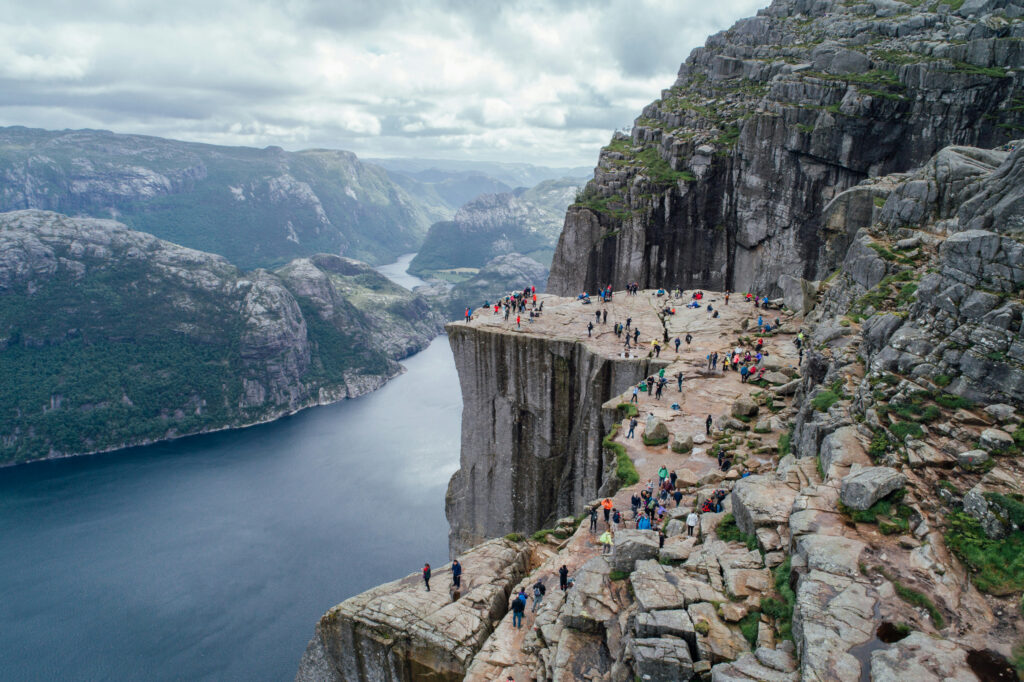
Preikestolen is giant, dramatic wedge of granite looming above the waters of Lysefjord in southwest Norway, about twenty miles from the North Sea. It’s been a tourist attraction for more than a century and today is home to Norway’s most-popular trail: Four hundred thousand people a year make the five-mile round trip hike. And yet, done right, you can still have it all to yourself.
• Preikestolen means Pulpit Rock or, more literally, Preaching Chair. It was originally called Hyvlatånnå, plane’s tooth, because it was thought to resemble the blade of a wood plane.
• It was first seen from the deck of steamship in Lysefjord, by Thomas Peter Randulff in 1896. Randulff and a friend were also the first to climb it. Lysefjord means “light fjord,” a nod to the ever-changing light and weather conditions.
• The vertical drop is six hundred four meters, or just under two thousand feet.
• The top measures twenty-five meters by twenty-five meters, or about eighty feet by eighty feet. Local officials calculate there’s room for six hundred people at once.
• Most visitors begin their hike in mid-morning, but local guide Johannes Apon, who’s visited Preikestolen more than three hundred times, prefers trips that start at eleven at night, so they arrive by sunrise.
• Or go in winter. “Marketing organizations actually warned people against hiking Preikestolen in winter,” said Apon. “ And I couldn’t figure that out because it was, to me, winter is the best time. When you’re lucky and there’s fresh snow, you’re almost alone. And having the mountains in a white blanket of snow, it gives you a totally different experience. You have to be a bit more prepared and all that, but it also feels a bit more like an expedition, especially for people coming from big cities.”
• BASE jumping is legal, but the combination of hikers, swirling air currents, and a mere two thousand feet of vertical drop discourages it—conditions are better at the eastern end of the fjord, where the cliffs drop more than three thousand feet.
• There are no fences. “In Norway, we have a culture that says people hike on their own responsibility,” said Apon, “and we have a very great sense of just having…you need to have common sense. You need to think for yourself. And it’s not normal to blame other people for your own mistakes or your own accidents, especially in nature.”