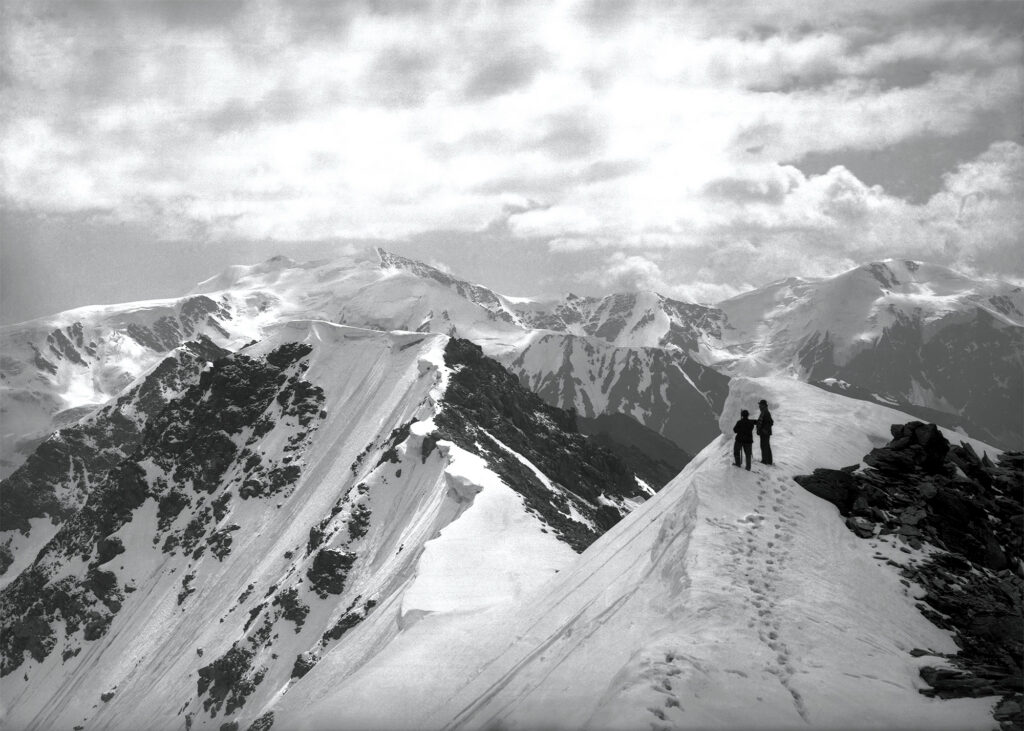
Vittorio Sella Was the First Great Mountain Photographer
In 1892, pioneering Italian mountain photographer Vittorio Sella was taking a long-overdue first trip to Great Britain, where a friend waited to help plan an expedition to the Caucasus Mountains and from which his agent had sold his work throughout Europe, but the English Channel crossing was rough and he stepped ashore nauseous and unsettled. Needing fresh air on the rail journey to London, he stuck his head out the window, with extraordinarily unfortunate timing, as the train was in a tunnel under the White Cliffs of Dover. Sella smashed his head on the tunnel wall, dislodging two bricks, and he tumbled backward in a pool of blood. The last thing he did before falling unconscious into a coma was to secure his coat collar against the cold.

If ever there was a person destined to photograph mountains, it was Vittorio Sella, born in 1859 in Biella, Italy, just thirty-five miles southeast of the summit of the Matterhorn. It was the heart of the golden age of alpinism, launched by the ascent of the Wetterhorn by Brit Alfred Wills in 1854 and bracketed by the summiting of the Matterhorn by Edward Whymper in 1865, a few weeks before Sella turned six. His uncle Quintino was a passionate climber who founded the Italian Alpine Club in 1863, and his father Venanzio was rapid about the new medium of photography, writing the first treatise on it in Italy, Plico del Fotografo. As a boy, he roamed the southern foothills of the Alps with his uncle, was fascinated by the machinery in his father’s textile factory, and experimented with chemistry, at age eight mixing sulfur, carbon, and saltpeter to create gunpowder and blow things up.
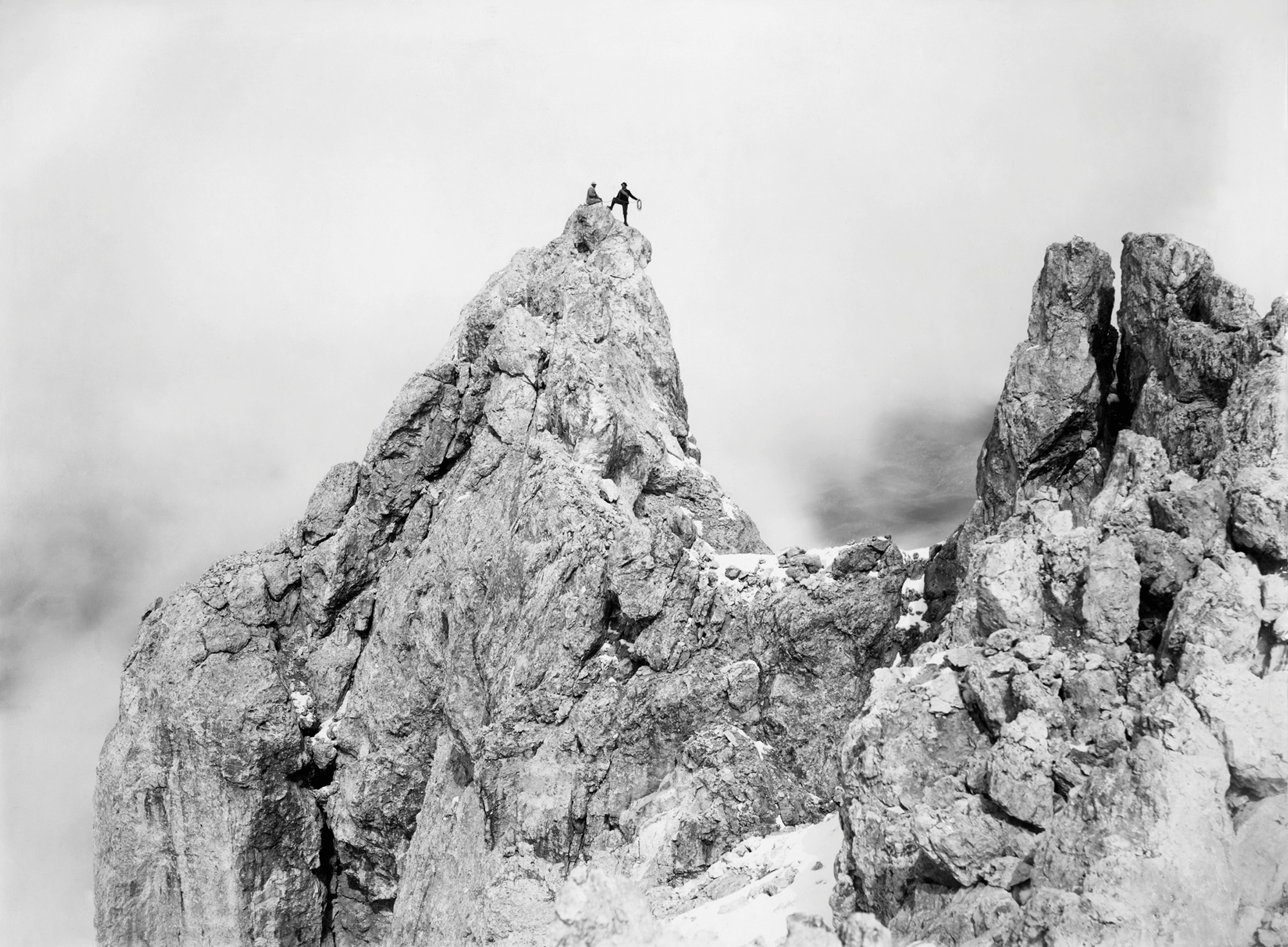
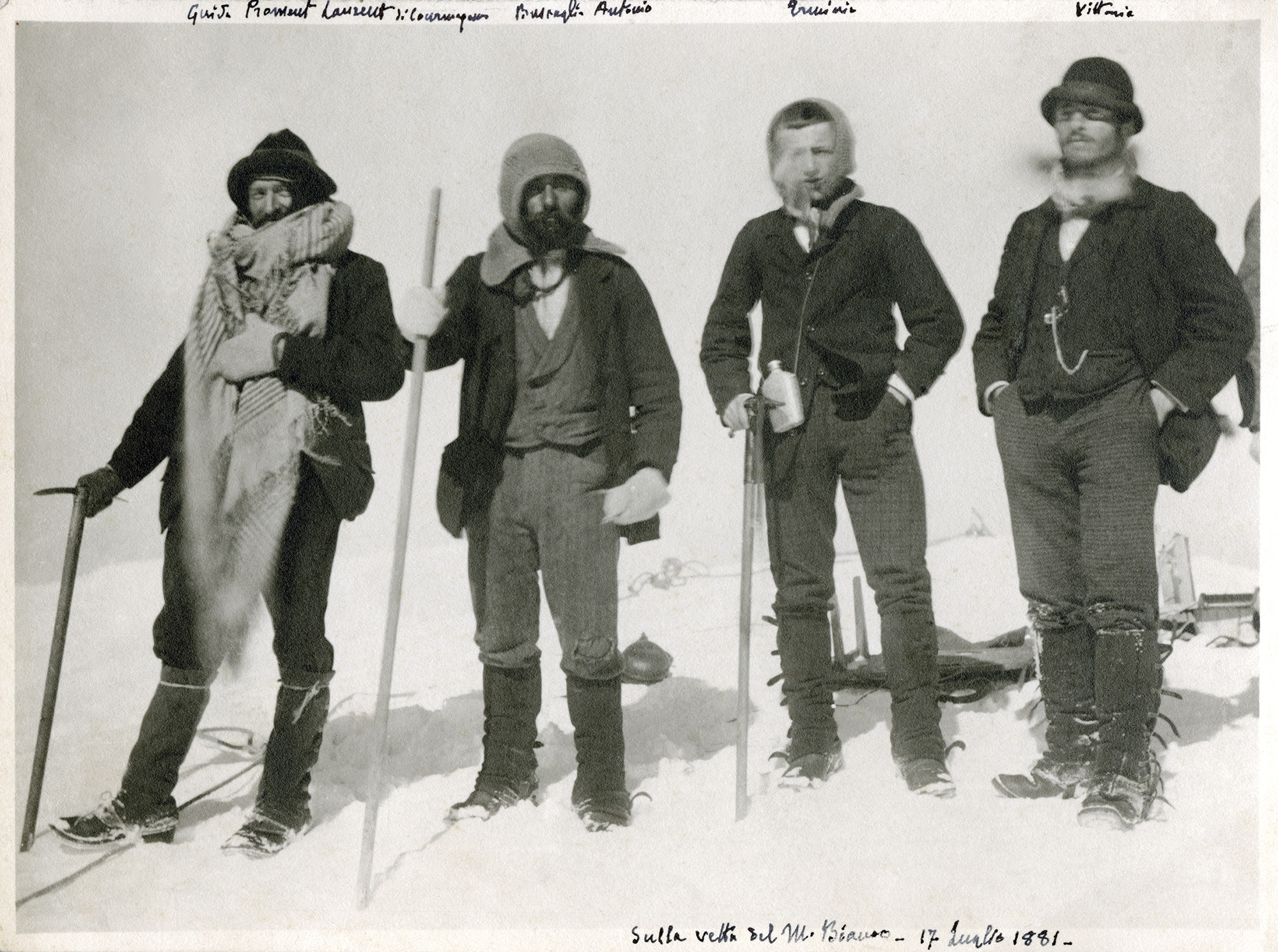
Sella developed a keen taste for the mountains early, and showed talent for the steeps. He stretched his climbing ambitions with the first winter ascent of Monte Rosa, the second-highest peak in the Alps, the first winter traverse of Mont Blanc, and the first winter ascent of the Matterhorn. Of the Matterhorn climb, the vaunted British Alpine Journal wrote, “This expedition is beyond doubt the most remarkable that has ever been made during the winter season and on behalf of the Alpine Club we most warmly congratulate Signor Sella on his magnificent feat.”
Sella himself, after an eleven-hour push that got his team to the top, said of the mood on the summit, “Our emotion was indescribable, almost holy.”
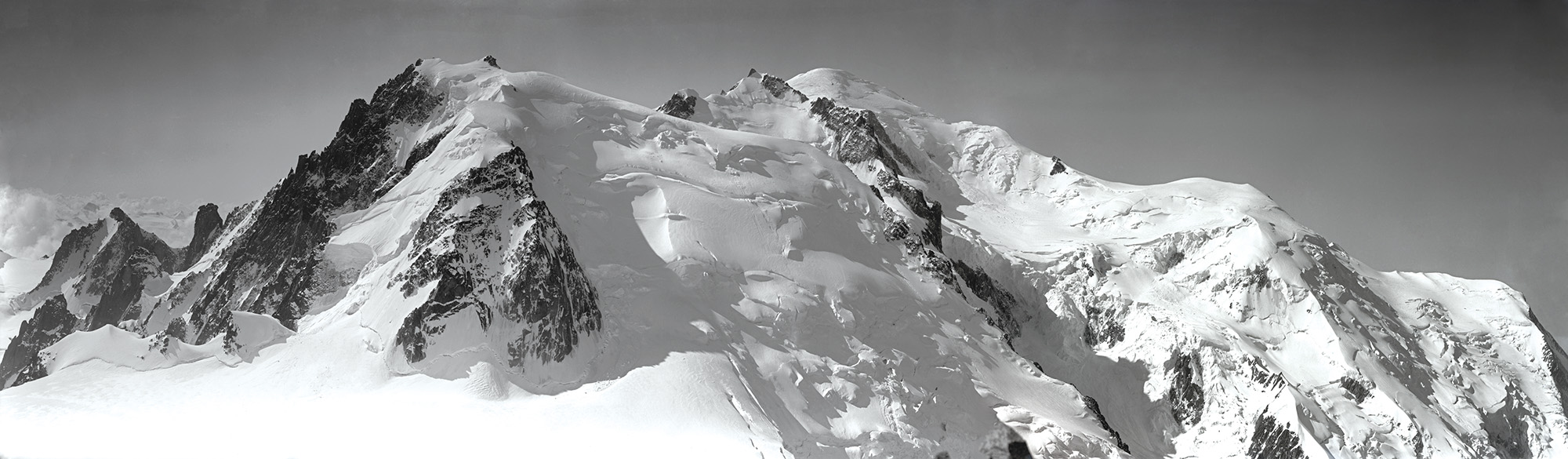
It was his climb to the top of Mont de Mars, eight miles from Biella, though, that set the path of his life. In July 1879, at age nineteen, and accompanied by a helper from the family factory, Sella carried a large and cumbersome borrowed plate-glass camera to the summit for his first major photography project, a panorama of the Alps from Mont Blanc in the west to Monte Rosa in the north. He spent six days on the peak, developing the two-pound glass negatives in a darkened tent, and another two weeks printing the results. He came away happy, though determined to find a lighter kit and better process than the wet-plate collodion development he’d used. Having inherited his father’s photo lab three years earlier, he devoted himself to experimentation and deconstruction of the gear, with mastery of equipment as his goal. He was intent on climbing the highest peaks and creating beautiful images, and nothing would stop him.
“I made up my mind to combine photography with alpinism,” he said, “and I took no interest at all in the lower parts of the mountains, and confined myself to photographic work on the summits, and to those higher regions in the Alps which were little known and had not been photographed.”
The next ten years were a rush of climbing, marriage, business, printing, traveling, selling. People had been capturing images with simple cameras for nearly a half-century, but the barriers to mountain photography were high. The camera Sella used on Mont de Mars weighed forty pounds, and the two-pound collodion glass negatives had to be developed immediately, there on the summit in a darkened tent, with hand-mixed chemicals and enough water to wash the plates. Other men had taken pictures of mountains, but none had his climbing skills, commitment to the craft, and eye for aesthetics. None were called to make it their life’s work, as Sella was.
“Three factors contributed to his success at this early age, and they form the key to the whole of his subsequent career,” wrote his biographer Ronald Clark. “There was, first of all, his complete technical efficiency…the second factor was the technical trick—of using the human figure to give splendor and perspective to the mountain scene. Early mountain photographers had only experimented on those lines, and it is not until Sella shows his ropes carefully treading snowbridges above giant crevasses, or the solitary climber regarding the great rock wall, that the human figure is used effectively to emphasize the scale of mountain scenery.
“The third, and by far the most important, factor which made Sella’s pictures so incomparably better than those of his contemporaries, was the way in which he combined his technical skill and his artist’s vision. He could always, it seemed, see the essentials of a mountain scene, and then so utilize the effects of sun, shadow, and atmosphere that those essentials were composed within the bounds of the ground glass plate as though on a painter’s canvas.”
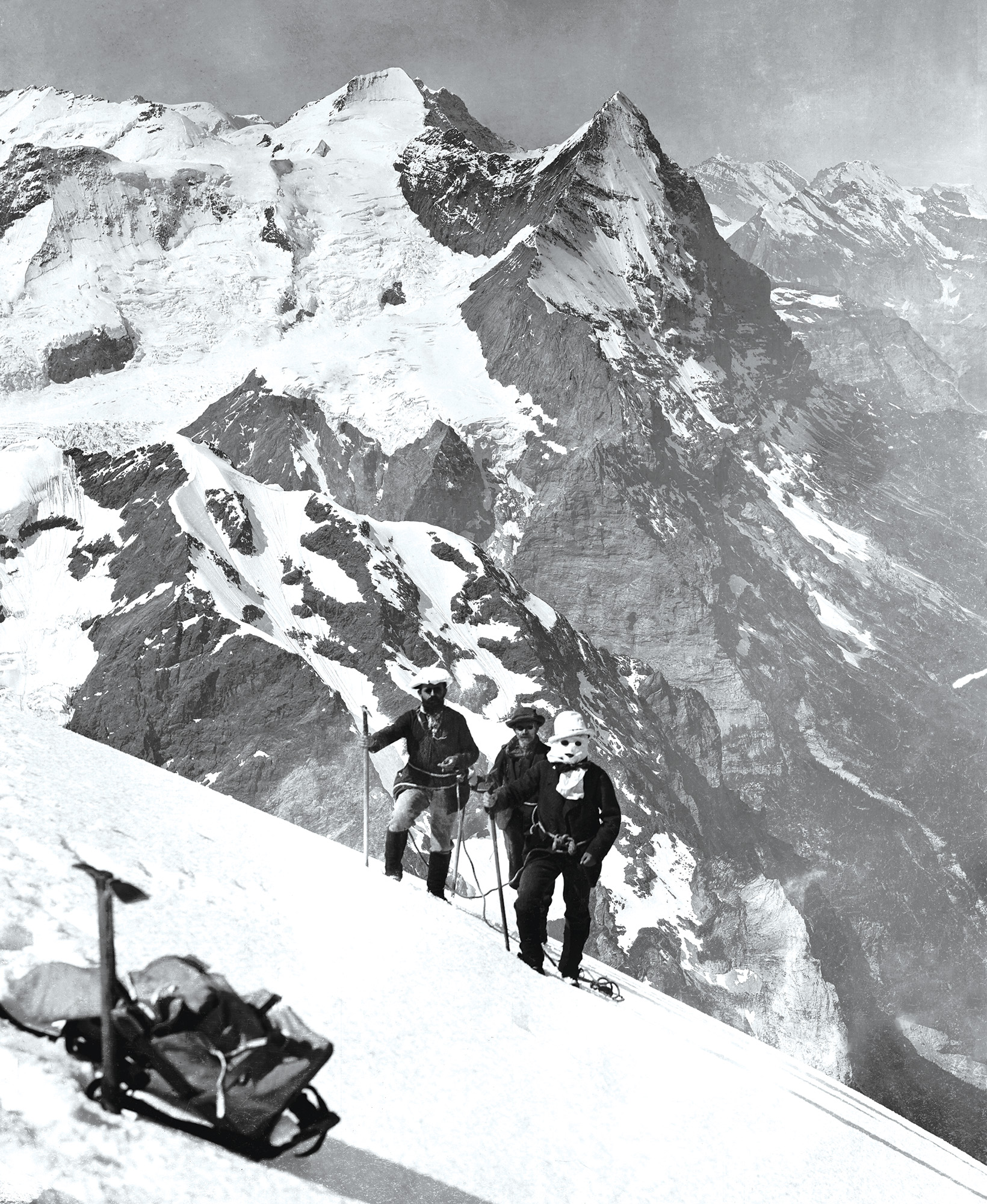
Between 1879 and 1892, Sella crisscrossed the Alps with his cameras, recording all the major peaks, and made two photo expeditions to the Caucasus. Even though the textile business provided income, he approached the commercial side of photography with vigor. Hustling would have been unseemly to a gentleman like Sella, but within the bounds of society, he pushed and pulled, writing to the rock star climbers of the day, such as Whymper, to include his images in their books. He set high prices and justified them emphatically; he niggled over the smallest detail, like reimbursement for postage. His renown spread.
“Wherever men loved mountains and talked of them, often the name of Sella might slip into the conversation,” wrote Clark. “The man was, in fact, becoming a legend, not only in his lifetime, but while he was still young enough to enjoy its benefits.”
Sella survived his head injury on the London-bound train. After two weeks in a coma, he regained consciousness with no apparent or permanent damage, astounding the medical staff at Folkestone Hospital southwest of Dover. The third Caucasus expedition took place in 1896, and he also spent the mid-1890s photographing missed peaks in the Alps and conducting photo surveys in Algeria, Morocco, and Sardinia. And then, as if scratching an itch for the biggest mountains, he went on four major expeditions back to back.
In 1897, he accompanied the Duke of Abruzzi—Luigi Amedeo di Savoia-Aosta—as the team photographer of an attempt to climb 18,008-foot Mount Saint Elias, located on the border of Alaska and Canada and the second-highest peak in either place. After two months of snow and ice, they succeeded. In 1899, he made the first photo survey of 28,169-foot Kangchenjunga, the third-highest peak in the world. In 1906, the duke called on Sella again, and they successfully explored the Mountains of the Moon, the Ruwenzori, in eastern equatorial Africa.
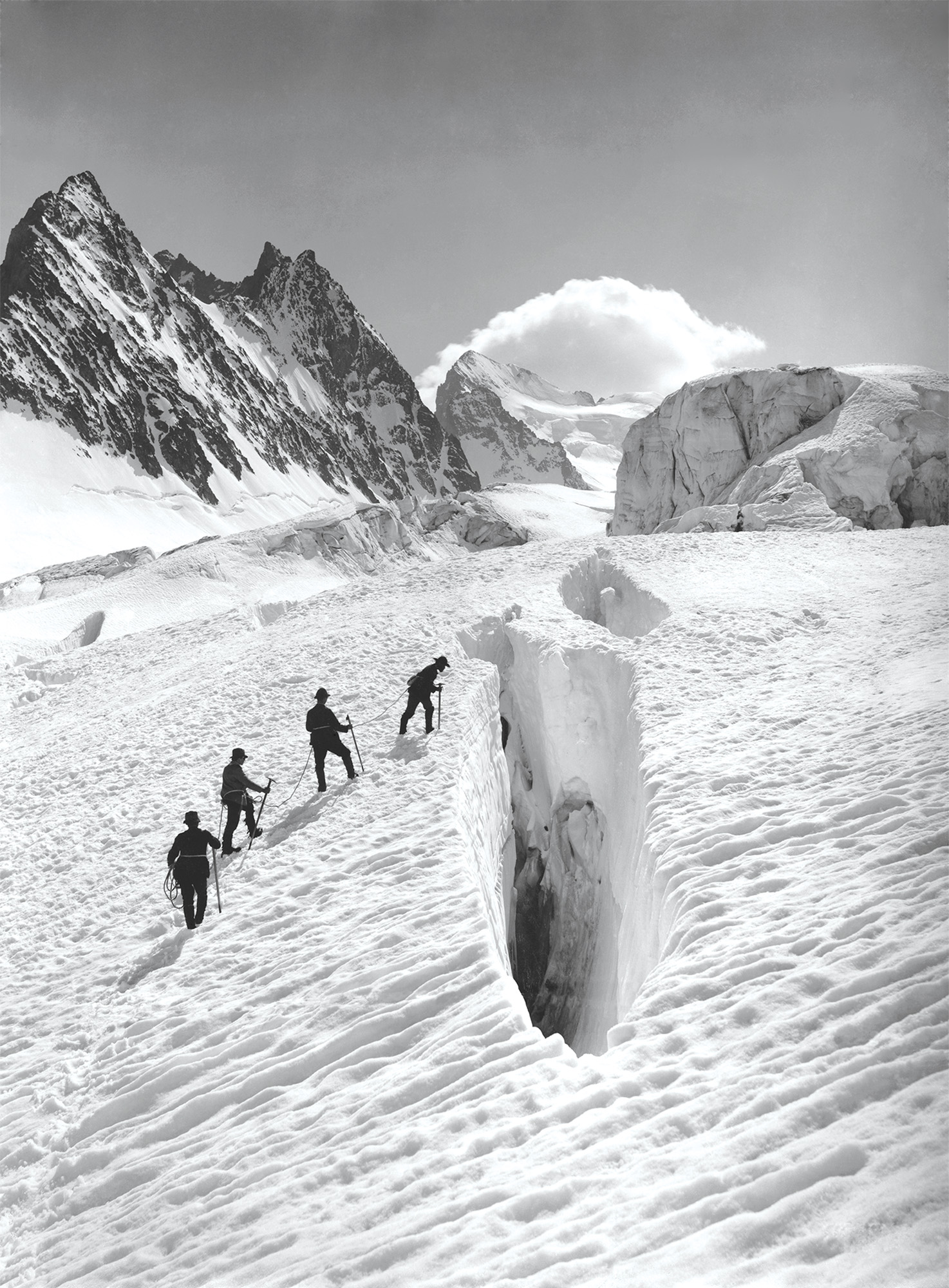
Sella was done. It was the twentieth century. National Geographic, the Royal Geographical Society, the Appalachian Mountain Club—all raised money to acquire his work for their permanent collections. He was ready to stop traveling, to relax in Biella, and to enjoy the fruits of his work.
Except, he wasn’t. The Duke of Abruzzi came calling again, this time with a pitch to attempt K2, taller than all other peaks but Everest. “I have been confidentially noted by the Duke of the Abruzzi to go to the Himalayas with him and his retinue, to start next month and return in October, with the aim of climbing K2 (!!??) in the Karakorum,” Sella wrote. “The proposal seduces me very much.”
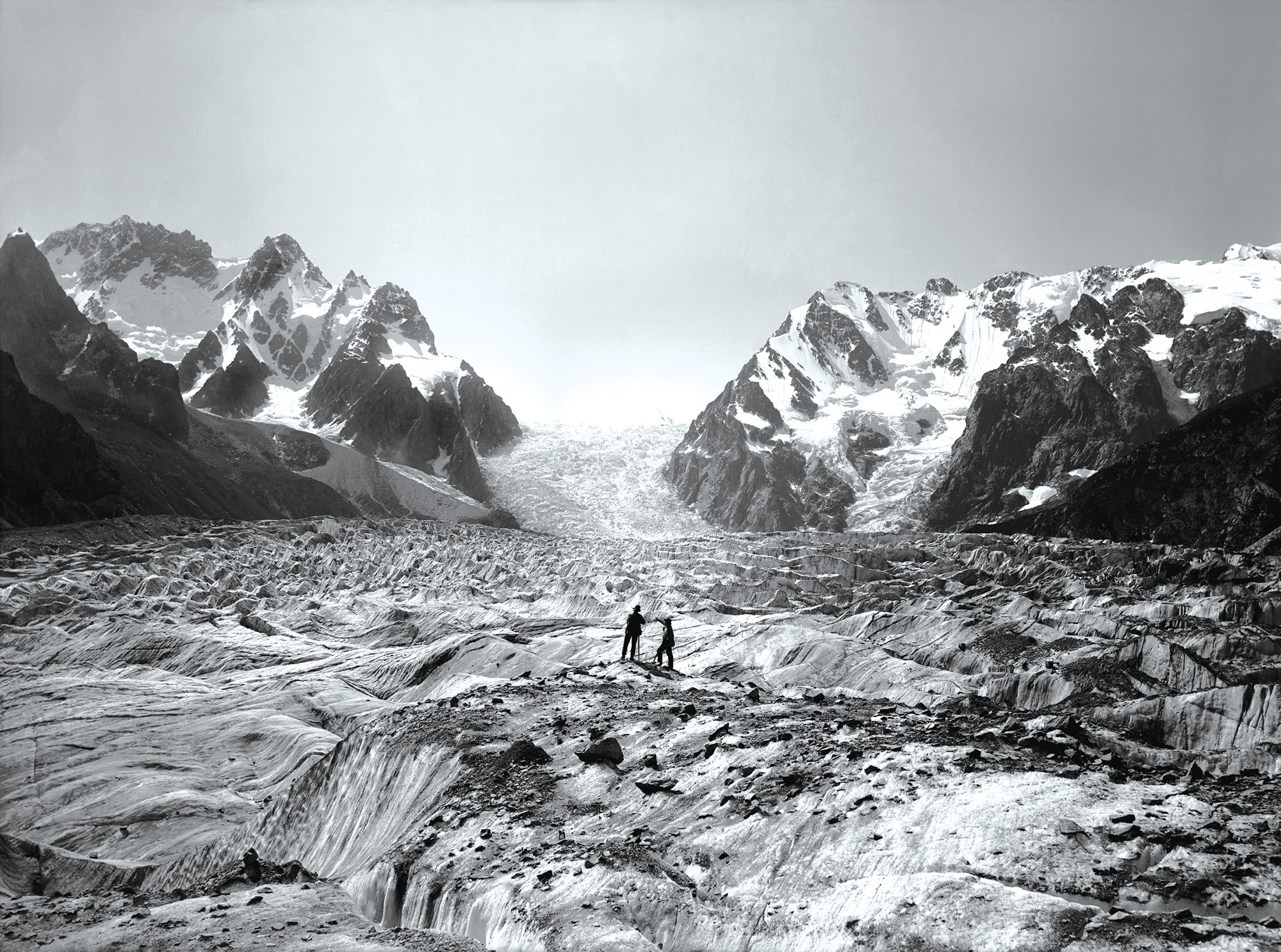
It was there, in the Karakorum, where he produced some of his most-famous images: the great slab of Mustagh Tower, the gleaming chisel of Mitre Peak, and the pleated, glaciated countenance of K2 at dawn.
Sella died in 1943 at age eighty-four, and when it came to mountain photographers, he was in a class by himself. Bradford Washburn and Galen Rowell would come later, much later. For more than half a century, there was only Vittorio Sella.
Sella’s legend was already established by 1902, when Ansel Adams was born, and as Adams grew to be a master in his own right, he revered the Italian’s work. Three years after Sella’s passing, he penned a tribute for the Sierra Club. “The average ‘expeditionary’ photography tends toward dullness and the mere factual recording of the scene,” Adams wrote, “but with Sella’s sensitive insight and response, the magnificence of mountains is clarified and distilled into a high order of expression. For, to a very definite degree, the work of Sella contains the qualities of greatness.”
Sella’s take was more concise. Writing to a friend, he said, “My only merit is that I have loved the mountains since I climbed them as a boy with my uncle, and then I took photographs of them.”
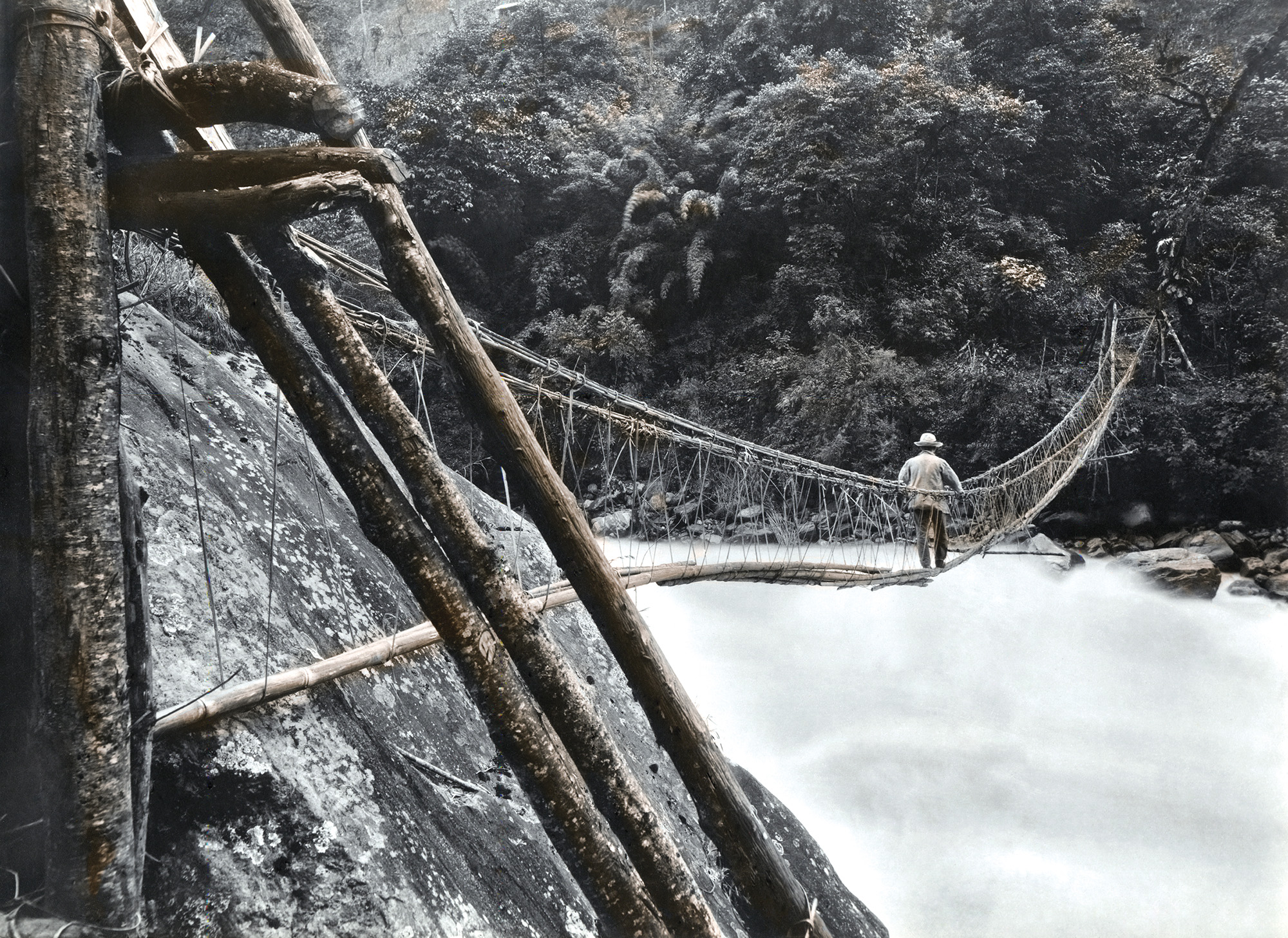
This story first appeared in Adventure Journal 34.