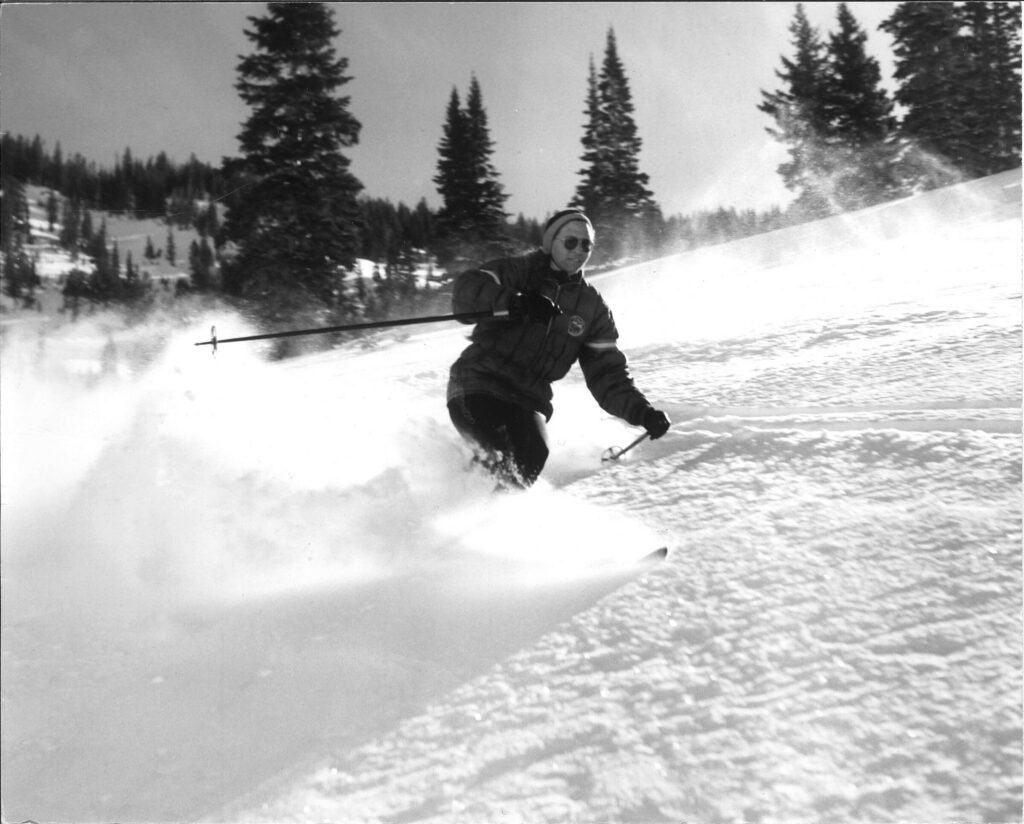
The World’s Deepest Powder Philosopher
She skied so magically, they called Dolores LaChapelle the Witch of the Wasatch
The snow bridge collapsed without warning. Dolores Greenwell was walking across a glacier in the Canadian Rockies in 1948 and then suddenly she wasn’t—she was falling, falling toward the bottom of the glacier, falling toward the center of the earth, falling into a crevasse of unknown depth and composition, with her stomach in her throat and her thoughts racing toward the inevitable stop.
Just twenty-two, Greenwell was already a veteran climber and skier. She’d summited all of Colorado’s fourteen-thousand-foot peaks by age twenty (there are fifty-four). After earning her history degree from Denver University she moved to Aspen to teach public school, because Aspen was the only place in Colorado with a chairlift. The next summer break, she studied at the University of Washington in Seattle for half a semester and became friends with the Whittaker twins, Jim and Lou, the former of whom would become the first American atop Everest in 1963. The brothers accompanied her to the summit of Mt. Rainier, where they shot fireworks for people in Tacoma to see and spent the night under the full moon, warmed by volcanic steam vents. That summer she wanted more, though, and so she continued north to Canada, where the “wild glacier peaks opened up a whole new vista,” and joined a Canadian Alpine Club climbing expedition.
There as the group trudged unroped across a glacier, the snow bridge gave way to a moment of terrifying uncertainty. But the crevasse turned out to be shallow and the landing soft, and Greenwell came to a stop unhurt. Shortly thereafter, a man peered over the lip to see if she was okay. It was Ed LaChapelle, a young Seattlite who overcame childhood polio to become a mountain climber and snow scientist, and whom she’d just met through the CAC. LaChapelle pulled her out and something clicked between them: They became fast friends, then more than friends. Six months later, LaChapelle wrote to Greenwell in Aspen, told her he’d been accepted at the Federal Institute of Avalanche Research in Davos, Switzerland, and asked her to marry him. They were wed in June and by November were on their way to the Alps, where the now Dolores LaChapelle would add to her image as one of the best female powder skiers in the world.
To skiers of a certain era, the name LaChapelle rings with crisp clarity. Ed would go on to become one of America’s pioneering snow-safety experts, and his 1970 book, The ABC of Avalanche Safety, was mandatory reading for generations of backcountry travelers. Dolores, after winning renown on two continents for her skiing prowess, wrote a series of philosophical explorations on the relationship between humans and nature, culminating in the 1993 pocket-sized manifesto, Deep Powder: 40 Years of Ecstatic Skiing, Avalanches, and Earth Wisdom. Ed’s book was designed to save lives, Dolores’s to save souls, and despite landing in the greed-is-good ’90s rather than the counterculture 1960s, Deep Powder quickly found its audience. Her message of enlightenment through powder skiing and oneness through motion was a tonic for the metastasizing commercialism of ski resorts and the aggressiveness of trends like extreme and big mountain skiing. When she wrote, “Everything I know, I learned from skiing powder,” a lot of beanied heads nodded in agreement, and by the time the decade was over she’d earned a reputation as the sport’s preeminent philosopher, a reputation that remains untarnished by the passing of decades or her death at age eighty in 2007.
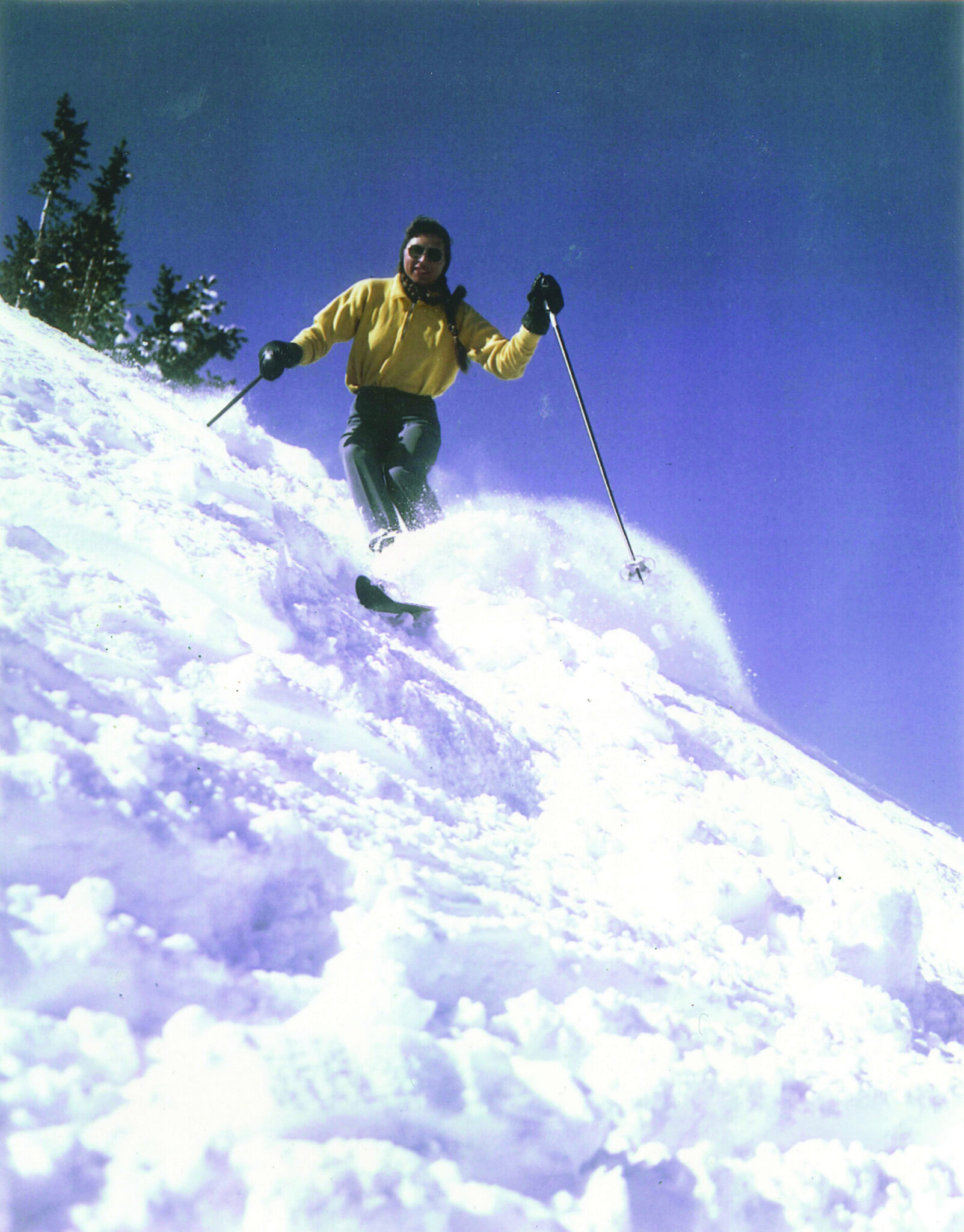
LaChapelle came to skiing at seventeen on a Colorado Mountain Club outing in 1944, when the sport was in its infancy and the country was engulfed in the Second World War. She purchased a pair of white, seven-foot hickory military surplus skis in Denver, then went with her sister and others to the Zipfelberger Hut on Loveland Pass, where they hiked or cadged rides for their turns. By the second day, she knew that skiing would be a lifelong calling. That spring, on her second ski trip, she got trapped between a storm, a cornice, and zero visibility, and the wind clawed her face ferociously. At the end of spring break, she had a third-degree burn, her lower face had turned black, and layers of skin were peeling away in sheets.
After graduating college, LaChapelle was offered jobs in three mountain towns, but accepted the first as soon as she heard “Aspen,” and when she arrived there in 1947 she landed in what would soon become one of America’s three major skiing centers (Sun Valley in Idaho and Alta in Utah were the others). Aspen had just installed its chairlift, replacing a sled-like contraption, and, with the war over, waves of veterans from the Army’s 10th Mountain Division were arriving, alpine-seasoned and ready to build the nascent ski industry. There was no grooming, and most people stuck to the narrow runs, which quickly became packed hard, but LaChapelle and a few friends regularly hiked from top of the lift to Bell Mountain, where they “had unlimited powder all the time.” She described those days like Eden before the fall: a town of spectacular natural beauty, people ready to put the war behind them and make the future, and a community united by newfound passion for sport.
“Skiing was what we were there for,” she wrote, “and that was our life. All else came second in those first years—work, the daily hassles of getting along, sex, and material possessions except for skis. Practically, what this meant was that it was much easier to live together. There were no long discussions over inner feelings; we just shared work and shared the bills and skied. If you didn’t fulfill your share, you were dropped because any time or money wasted meant that much less skiing.”
A bit clinical? Yes. LaChapelle was no-nonsense, frugal, practical, and direct. She was also raised Catholic and practiced a rigid adherence (“I was a fierce Catholic virgin”). She tended to put people into set categories, said Ananda Foley, who was the partner of LaChapelle’s son, David, and is now the steward of Dolores and Ed’s literary estate. “She’d decide, this person’s good at this. She placed a lot of value on heredity, because then she’d know what to expect from people,” said Foley. “She wasn’t warm and affectionate. She wasn’t cuddly.”
What she was, was focused on skiing and heaving around those seven-foot hickory sticks. In the 1940s, most people used the Arlberg technique, developed by Austrian teaching legend Hannes Schneider (skiers who followed him were called schnee hasen, “snow bunnies”), which required one to force the long, stiff skis through giant arcs. That didn’t work in the steeps of the West, or narrow chutes, or the trees, and over in Alta in the late 1930s, a skier named Dick Durrance developed a style that became known as the single dipsy (named for a Tommy Dorsey song whose rhythm it mirrored). Durrance was a climber accustomed to heel-sliding down scree fields, pushing one heel down at a time while keeping his upper body in the fall line, and this was how he approached the deep, dry snow at the head of Little Cottonwood Canyon. The method worked and from Durrance it spread to the men of the 10th Mountain Division for training and from them it made its way to Aspen and then to Dolores.
In November 1950, when the LaChapelles moved to Davos, Ed spent his days studying at the avalanche institute and Dolores skied. Each month throughout the winter, the price of tickets dropped, and in March it cost just five dollars for the whole month of skiing. Almost immediately, her novel single dipsy style caught the eye of the locals (the move later evolved to become two-footed and known as the double dipsy). One day, an instructor called to his students, “Look quick, there goes a pulverschnee spezialist!” Soon, she had friends, then powder-hungry friends, and then she taught them her technique and the dipsy was spreading throughout the Alps.
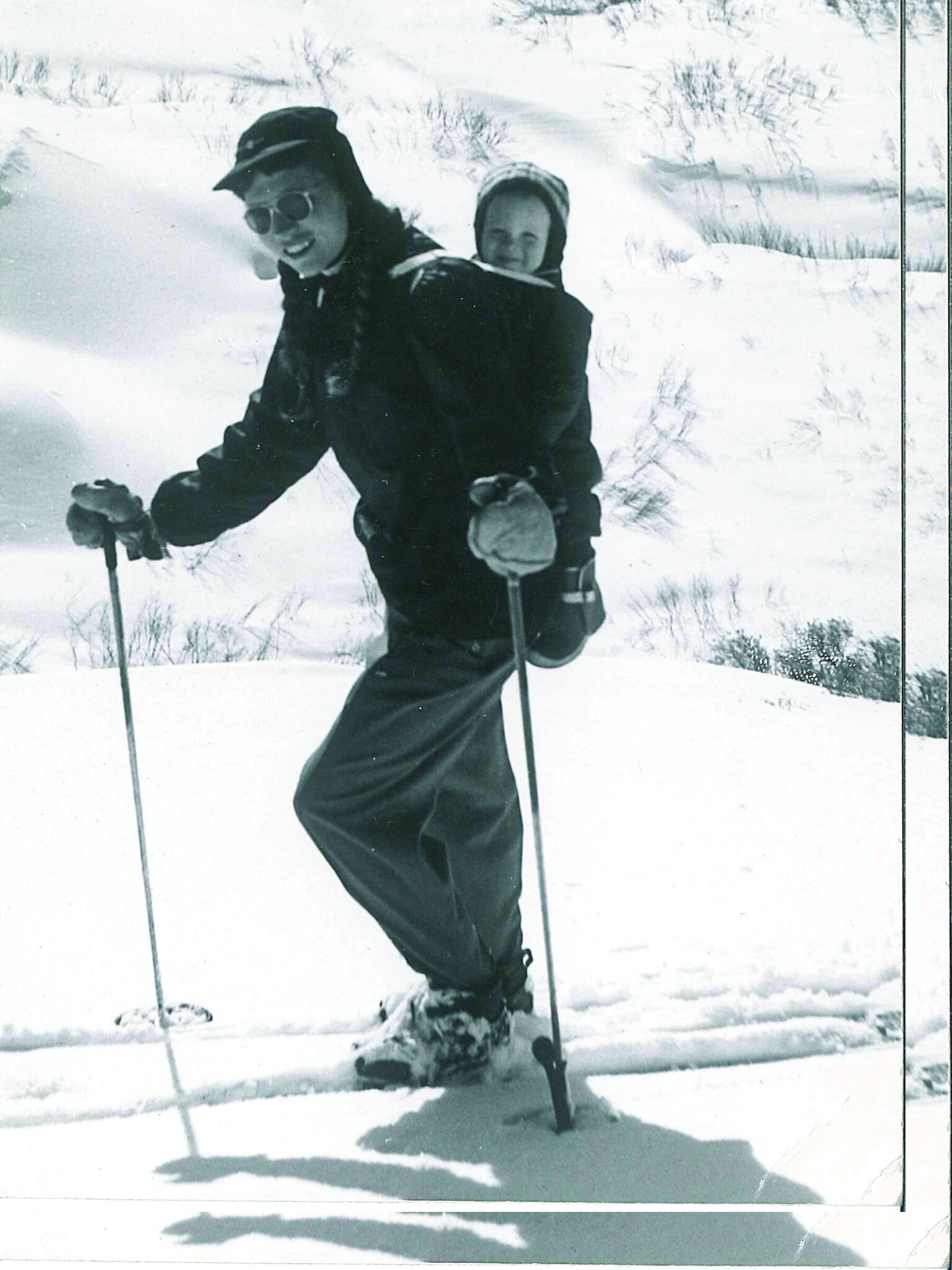
Whatever impact she had on Switzerland, its impact was bigger on her. For the first time in a meaningful way, she considered the relationship between snow and wind and slope angle and the larger forces at play. She was caught in her first avalanche, breaking the illusion she’d carried from Colorado that slides happen to other people. She studied what she called the mountain peasant culture and began to think about how people related with the mountains. “This was the beginnings,” she wrote, “of my future work in concerning how to live in balance with nature in one’s own place.”
Their time in Switzerland was short, but the next stage would last years. Dolores became pregnant with David, and Ed accepted the position at Alta of snow ranger. In 1952, they moved to a cabin up the hill from the base. There were two lodges, Rustler and Alta. More than five hundred inches of snow fell a year. Snowbird, the resort next door, would not be built for another twenty years, and the community was small and tight. It was, for a time, paradise.
When David was old enough to ski on his own, Dolores became an instructor with the Alta ski school. “I had more time to ski powder and powder began teaching me more and more,” she wrote. “My experiences with powder snow gave me the first glimmerings of the further possibilities of mind. Because of a snowfall so heavy that I could not see the steep angle of the slope, I learned to ski powder quite suddenly, when I discovered that I was not turning the skis, but that the snow was—or rather the snow and gravity together were turning the skis.”
This was a revelation. She didn’t have the words for it yet, and she wouldn’t until she learned about German philosopher Martin Heidegger, who wrote of the interrelationship between earth, sky, gods, and mortals (and who took his students skiing to illustrate his concepts). But LaChapelle knew she’d found something that had been unavailable to or hidden from her in other planes, whether blocked by Catholic doctrine or hindered by a relationship in stasis. For all she and Ed had in common, their marriage offered none of the ecstasy she found in the snow. Their sex was fraught with conflict—Ed “easy, normal,” Dolores trapped by dogma—and their communication wasn’t much better. They stayed together, stuck, because his job enabled them to live in the mountains.
“Finally,” Dolores wrote, “an avalanche saved me.”
She had a friend. Perhaps a flirtation, perhaps a crush. No, it was more than that. He loved her. They became “too close because I felt it was safe.” The tension built; something would have to give. After a month with no snow, it dumped, and she skied that day from the first chair to the last, and at the end there was just one run left untracked, on the west side of Peruvian Ridge, steeper than all the others. Her companions waited in the trees while she scouted a line through some cliffs. She slid forward, and then the world was moving.
“I was in the air! Turning over and over. I thought, You don’t live through this—flying through the air—but it’s good I’m dying. I’m tired of this ongoing sexual battle. Then I landed and I wasn’t dead! What a shock.”
LaChapelle had the sense to thrust a hand toward the surface as the slide came to a stop, and in this way she was found and dug out from her burial beneath three feet of snow. She woke up in a hospital, bound in a body cast, filled with relief that she could move her toes, but then despair—she didn’t die, there was no escape, and she was still mired in a marriage that no longer worked.
“Then came the breakthrough,” she wrote. “I had been willing to die a martyr’s death for my Catholic faith—die, rather than commit a mortal sin by doing sex. But they hadn’t let me die. So I don’t have to do that any more. It was that simple, [and] the Catholic religion just left me.”
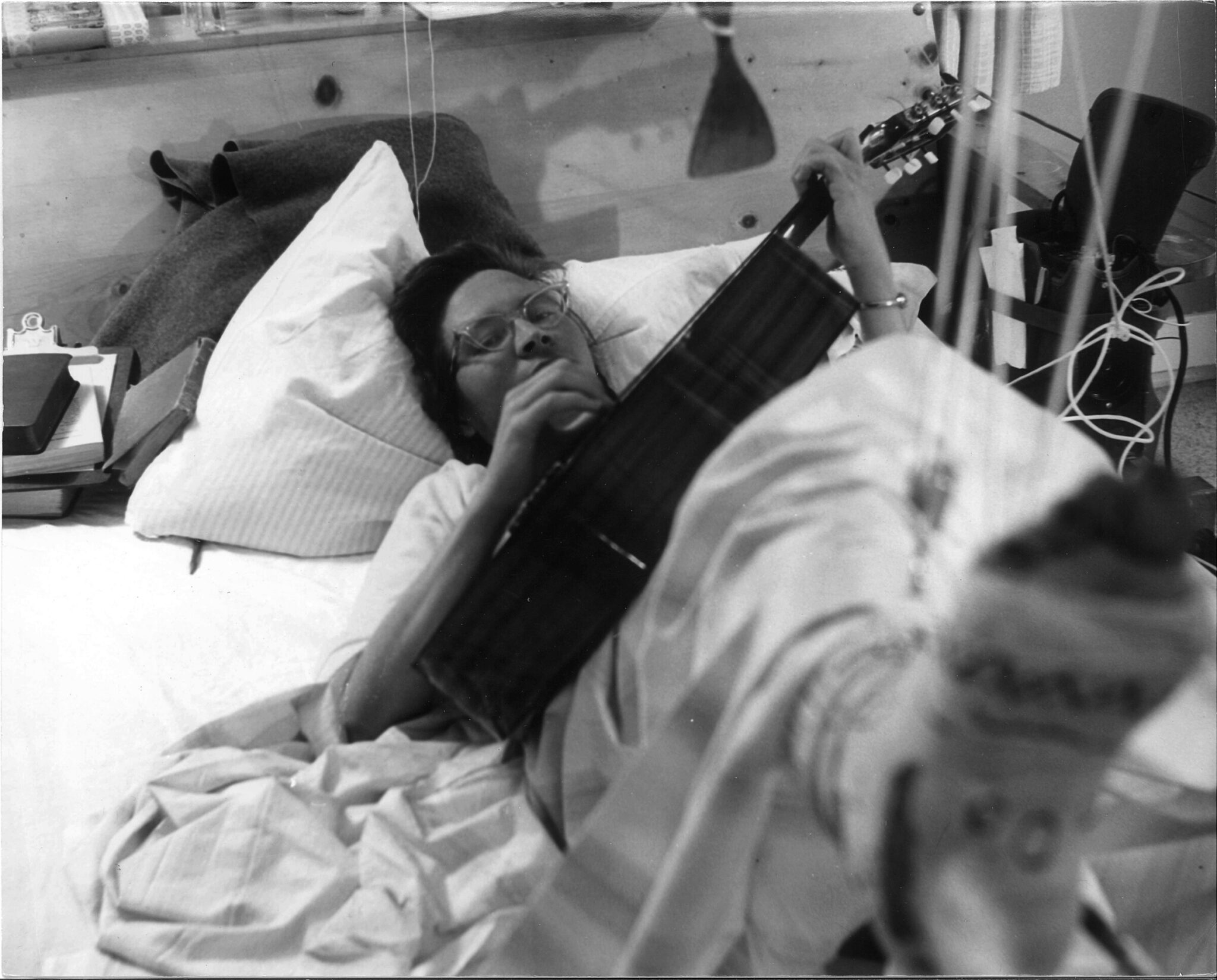
There in her hospital bed, LaChapelle underwent a conversion. She abandoned religion and embraced spirituality. She concluded that lifelong sexual monogamy was a culture constraint that cut across human nature. She meditated on how people—men—apply the language of gender to nature in yet another attempt to conquer, and, while still in the hospital, for the first time picked up a pen and starting writing, her debut piece a satirical account of an imagined lifelong affair with powder. Her body cast was so heavy it took six ski patrollers to carry her to the cabin at Alta, where she spent another month confined. That’s where she first encountered Heidegger, in a book, and discovered a framework of thought for what she’d been feeling through her skis.
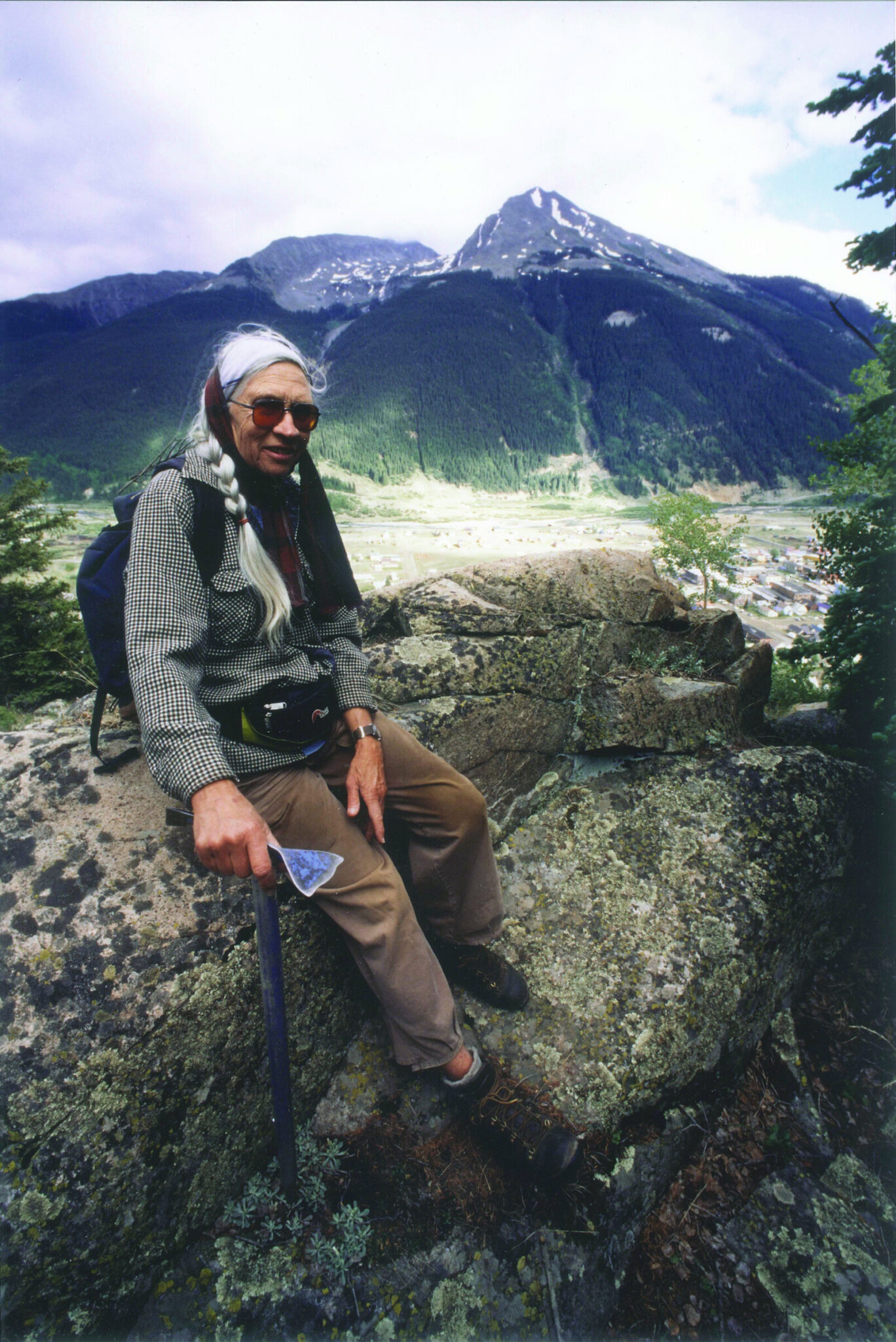
The rest of her life was spent in what David LaChapelle called an “uncompromising search for her own spiritual integrity.” She took up tai chi, settled in Silverton, Colorado, and opened the Way of the Mountain center, where she wrote, taught, and published. She and Ed divorced, and she dated younger men and talked of “seasonal husbandry,” with monogamy as the “biggest substance abuse of all.” Instead of a life partner, she dedicated herself to the San Juan Mountains. Her research eventually brought her to Norwegian philosopher Arne Naess, who coined the term “deep ecology” to describe a more holistic relationship with nature, in which all things have inherent value regardless of use to humans. “I realized that finally, here was a name for what I was doing,” wrote LaChapelle. After writing a handful of moderately successful books, Deep Powder was an intentional effort to craft a best seller. She deliberately made it pocket-sized so people could carry it anywhere, and it was a smash, its sales enabling her to pay for a small house in Silverton. Its message was prescient, and it remains popular today, if out of print, forcing a new generation of seekers to track down used copies that can go for seventy-five dollars.
“Powder snow cannot merely be considered a metaphor for living, but rather, skiing powder shows us how to live. If we insist on proceeding arrogantly in the narrowly human-centered world of modern culture, we will continue to not only destroy the earth’s species but the very water and air on which we depend to live. But if we move every step of our life totally aware of the other beings in the fourfold: the earth, the sky, the gods, then we automatically cease destroying the earth.
“I know of nothing which teaches one to live valid as quickly as powder snow.”