When a Family Cabin Forms You
Our family cabin was located in a tiny north-south valley, which was located in a larger east-west valley, and so I imagined the terrain as a giant Phillips-head screwdriver pattern, with our little spot in the very bottom of the center. It wasn’t exactly the Grand Canyon, because this was central Pennsylvania, but the trees grew thick in the hollow and embraced each other overhead, and the narrow ribbon of dirt that ran along the floor was known as Dark Woods Road. At night, driving down the road, local men like my uncle, who worked in the coal mines or farmed or both, would turn their lights off and glide through this tunnel, eliciting screams from the women and cheers from the kids, who knew that the ten-foot drop to the creek added an element of danger that wasn’t without merit.
We weren’t the kind of family that bought cabins. Vacations were road trips to stay with relatives. Summers were spent at home, walking each day to the local community pool. In a big year, we might take a jaunt to Tidewater or the Virginia shore to camp for a few days or maybe drive down to North Carolina’s Outer Banks and stay in cheap motels. But my mom’s roots were Pennsylvania Dutch—Schuylkill County, red barns, hex signs. The Luckenbills were descended from brothers who landed in 1730 via the Thistle of Glasgow by way of Rotterdam and the Berne region of Switzerland before that. Their name derives from “lugen,” which means “to look out,” and “biehl, buhl, buhel,” which means hill. So: mountain folks. Mountain folks who could see in all directions.
The family farm had been passed from generation to generation for 150 years, and we drove up often from Northern Virginia. One day visiting my aunt, we went to an auction and by the end of the auction we found ourselves owners of two and a half acres and a two-bedroom concrete box. Total cost: $3,300. Even then it wasn’t much money. Not for a cabin, anyway. I was 11.
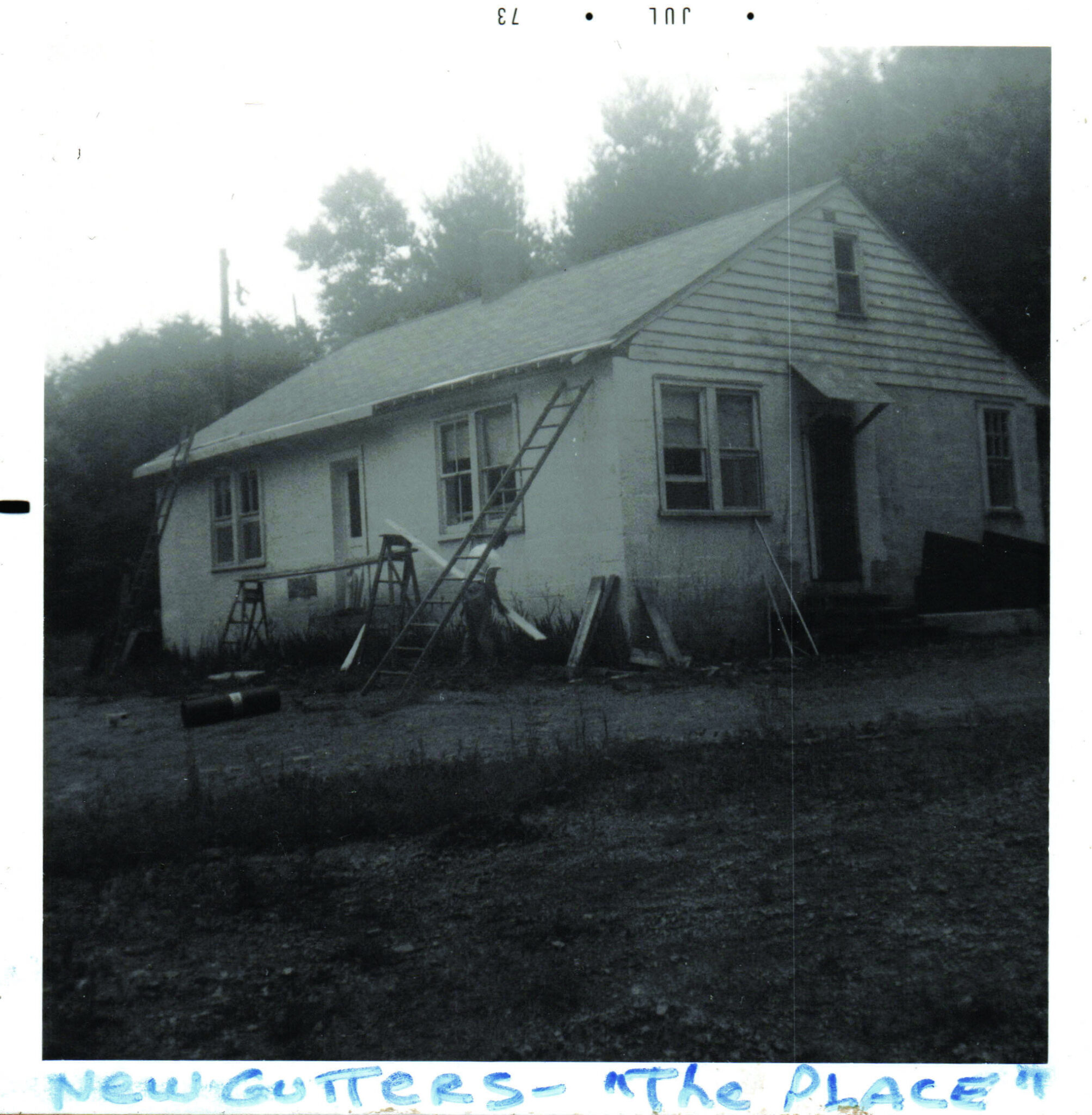
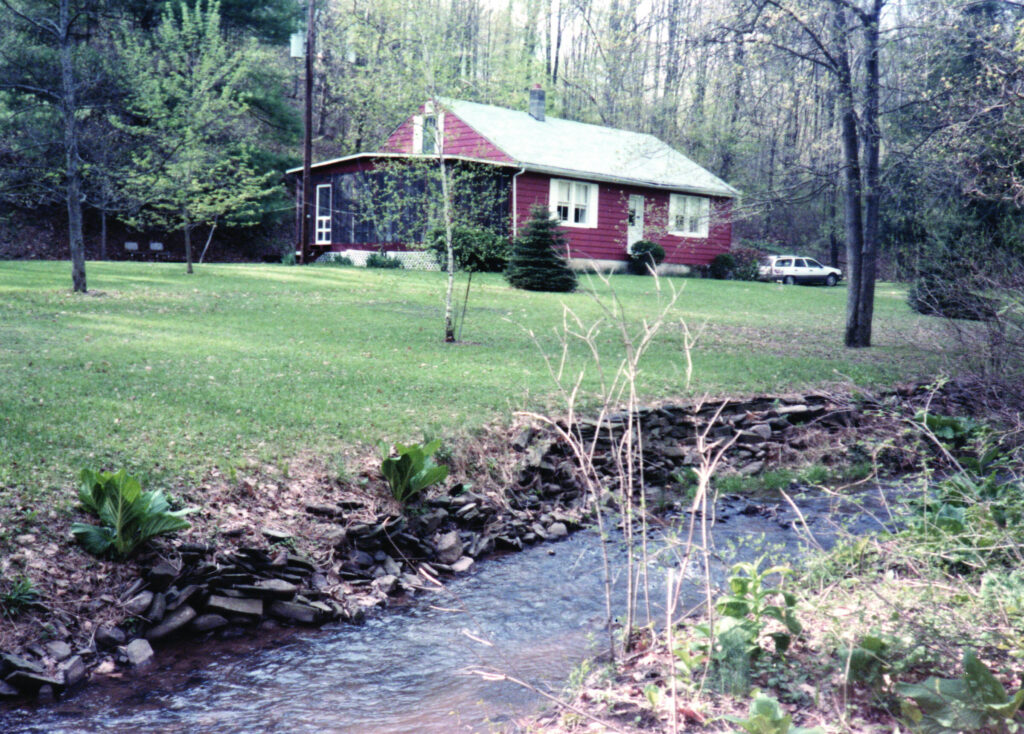
The land was primeval to me and thus wonderful, about a third of it grassy field, the rest wooded hillside, and there was a creek filled with silver striped minnows. The house was perched on the flattest spot and it was by nearly every measure disgusting. The people who’d owned the place before us were hard on luck, and they seemed to care little for the house or its steep hills. For the first couple of years, we spent every summer weekend trying to badger it into something less scary, if not yet what a reasonable person would call livable. We propped up the slumping outhouse until we could install plumbing in the house. We pulled junk out of the creek. Rebuilt the Hillary step of cinderblocks that had to be scaled to enter the front door. Drilled a well in the front yard, installed a hand pump, and then fixed the wooden bridge over the creek when it collapsed under the weight of the drilling truck. We plugged the hole that ran directly from the bathroom tub into the dirt basement, then drained the lake of malarial bathwater festering under the house.
For the first summer or two, we slept outside in a giant canvas tent. In the morning, my mom would make pancakes on a two-burner Coleman stove and then we’d get to work. There was no end to the work. We painted and patched and reframed doorways. We dug. We reinforced. We laid something, linoleum, I think, over the bare sheets of plywood that served as the floor. I was responsible for cutting the acre and a half of grass with a pull-start gas hand mower purchased at auction—and despite my grumblings, I was required to catch the trimmings. Thankfully, by afternoon, when the gnats were piranhas and the humidity dripped from the trees, I would at last be allowed to put down the shovel or paintbrush or rake and go.
Before me was the complete and unrestrained freedom of a boy on the verge of adolescence. There were no rules other than “be back by dinner.” I was free to roam and not tell my parents where I was going or what I was doing. How could I when I didn’t know myself? The woods were filled with opportunity in every direction, the patchwork of farm fields and the topography of rolling hills easy to navigate. North-south, east-west. There were no predators, pot wasn’t yet being grown between the cornstalks, and my only worry, at least outside hunting season, was an aggressive farm dog or two. In cutoff shorts and Converse All-Stars, I disappeared into the promise of it all.
The first year of the cabin, I was on foot and never got more than a mile or two away. I covered every inch of our land and scoured the woods looking for natural forts, for bear dens, for adventure. I marveled at the land—wild land and not some manufactured parcel of suburbia like back home; that wasn’t land. I climbed the pine trees that follicled the hills and learned how to smear dirt on my palms to take the sticky away from the sap. I carried a Buck knife and crafted a bow and arrows with some twine, their flights as wayward as my carving. I learned how to deal with it when nature calls and you’re out in nature itself and I began to understand that practices people took as necessary maybe weren’t.
By the second summer, I’d made a friend. It seemed destiny, in a way. His name was Corky and he lived in the closest house to us, a quarter-mile down Dark Woods Road. Our birthdays were less than a month apart, and if his culture was redneck and mine was suburban, it nonetheless worked for both of us: I was smarter, but he was bolder, and with 125cc dirt bikes under our butts, it seemed there was no place we couldn’t get to and nothing we couldn’t do.
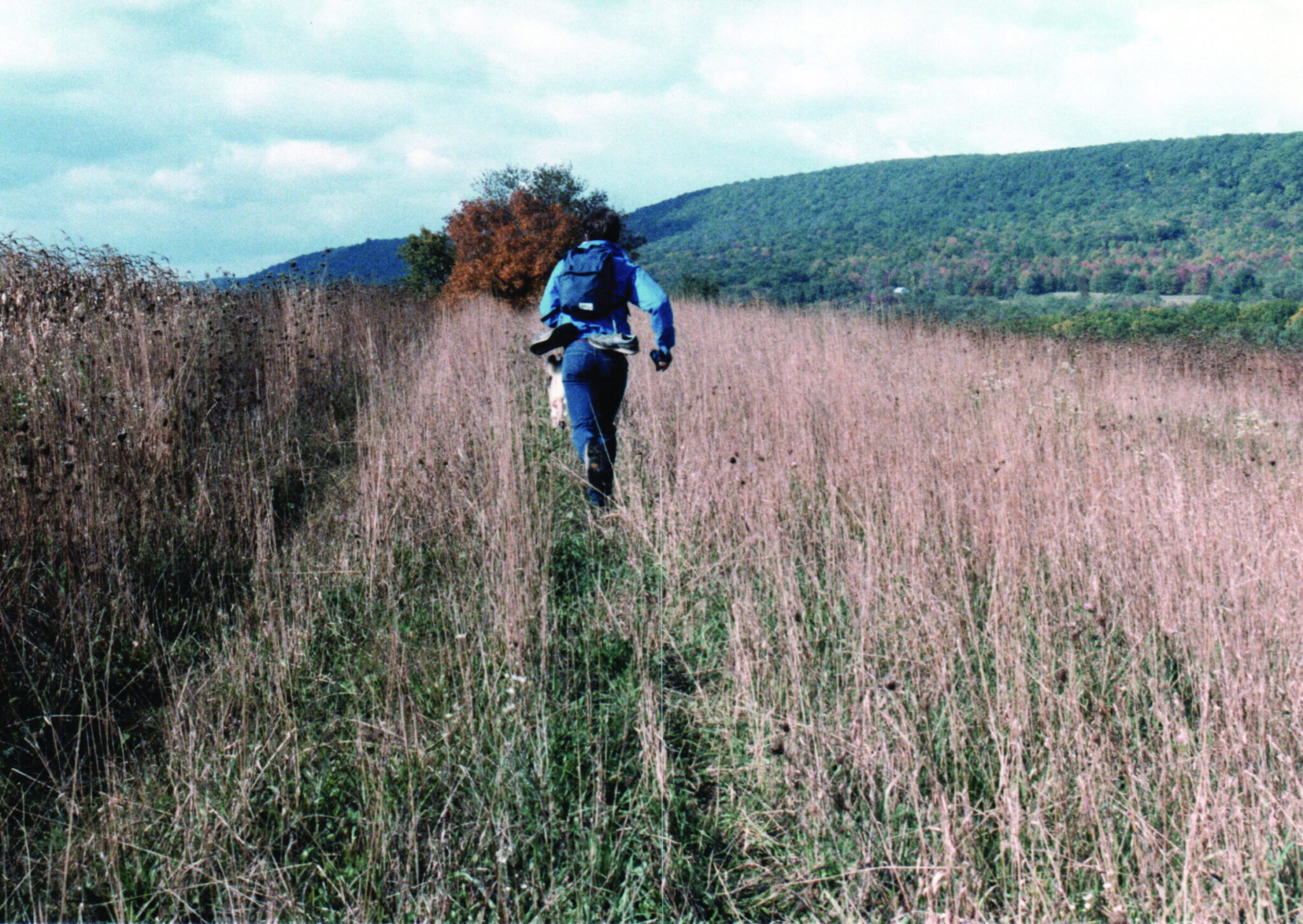
Kids find trouble young in that part of the world. Shooting accidents, pregnancies, early drinking, motorcycle crashes, but whatever shenanigans Corky undertook while I was back in my regular world didn’t leach into ours when we were together. With our freedom, we simply explored, pushing the bikes to the edge of their range, testing their power on hill climbs, looking for trails and lakes and mountain views. All I cared about was learning what was in the blank spots on the map, and as each was filled in, it created a hunger for more.
Summer after summer, the suburban kid morphed. I killed a rattlesnake lurking about the property and skinned it. My uncle taught me to shoot rifles and handguns. My dad bought me a .410 shotgun, but when Corky and I went squirrel hunting I discovered I had no real desire for killing, except maybe the odd and seemingly threatening snake. I worked the fields with my uncle on his tractor (or tagged along and was given tasks to keep me out of trouble) and accepted chores around the farm, like feeding hogs that weighed ten times as much as I did.
My dad was raised along the shore in Massachusetts during the Depression, where he learned to subsist on what salt water provided. First generation Portuguese, he strove to rise above his immigrant poverty. My uncle, though, was vulgar and coarse, and while my dad hid his ragged edges from me, my uncle took no such precautions. From him I learned about tattoos, cussing, and bullshitting. On his farm, I witnessed reproduction and biology and death, seeing dogs couple (“get the hose!”), watching kittens being born, and helping to remove a stillborn calf from inside its mother with a block and tackle. My uncle ragged me interminably about being a city kid, but he toughened and molded me each step of the way, and every once in a while I’d catch a sparkle in his eye that suggested there was more going on than just giving me shit day after day.
The cabin had a tragic history. The previous structure had burned down, sparked by a cigarette left unattended, and some of the family who lived in the prior structure perished. The mother and one child escaped, but the father went back to save two children and all three of them died before they could get out. They succumbed in the corner of the room that was my bedroom, Corky told me. Maybe that was truth and maybe it wasn’t, but I believed it. The mother had taken what little money she had, drank most of it, and used the rest to rebuild a cinderblock structure on top of the old foundation, funhouse framing formed by a grieving and drunken hammer. To my unsentimental parents, the cabin was a bargain within reach, a once-unimagined vacation home, but for me, when night would fall, it was the place that brought goosebumps. If Corky was lying, if something dark hadn’t happened in my room, why would our dog never, ever enter it? Dogs know.
This was also a period when Bigfoot loomed large in popular culture and even larger in my child imagination. It was too hot in the summer to keep the windows closed, so we propped them open with pop-in screens. The wooded hill behind the cabin came within fifteen feet of my bedroom window, and I slept on the farthest edge of the old brass bed, away from the window, attuned to every crackle of a leaf or snap of a twig. One swipe of a paw and those screens would be gone, me with them most likely. Between Bigfoot and the ghosts in the room, it’s a wonder I slept at all. To this day, I still think one of the bravest things I’ve done was muster the courage to walk home from my aunt’s house late one night after hours of card playing. Midnight, me 13, yetis everywhere and spirits beyond that, miles through the woods and fields, too afraid to turn on the borrowed flashlight because then I’d be easier to catch. But I did it.
The place—that’s what we called it, “the place”—eventually bowed to my parents’ long years of labor and my sometimes begrudging cooperation. It was never a quaint, classic cabin, but we bullied it into having running water, a toilet, and a bath. Burgundy aluminum siding hid the lousy cinderblock walls. My parents put a wonderful screened porch onto the south end, where we watched deer grazing in the meadow. Fall nights were tamed with the warmth of a pot-bellied stove, the grass trimmings pile by the creek now covered in the confetti of autumn leaves.
The more the cabin became civilized, the more I became country. I now knew how to drive the John Deere on a sideslope, how to catch minnows for bait with a Mason jar, and the cleanest way to fillet fish I hooked. I could shoot rifles, handguns, and shotguns straight, even if the only things I hit were paper targets and empty cans. The woods became as familiar as my neighborhood in the suburbs of D.C.
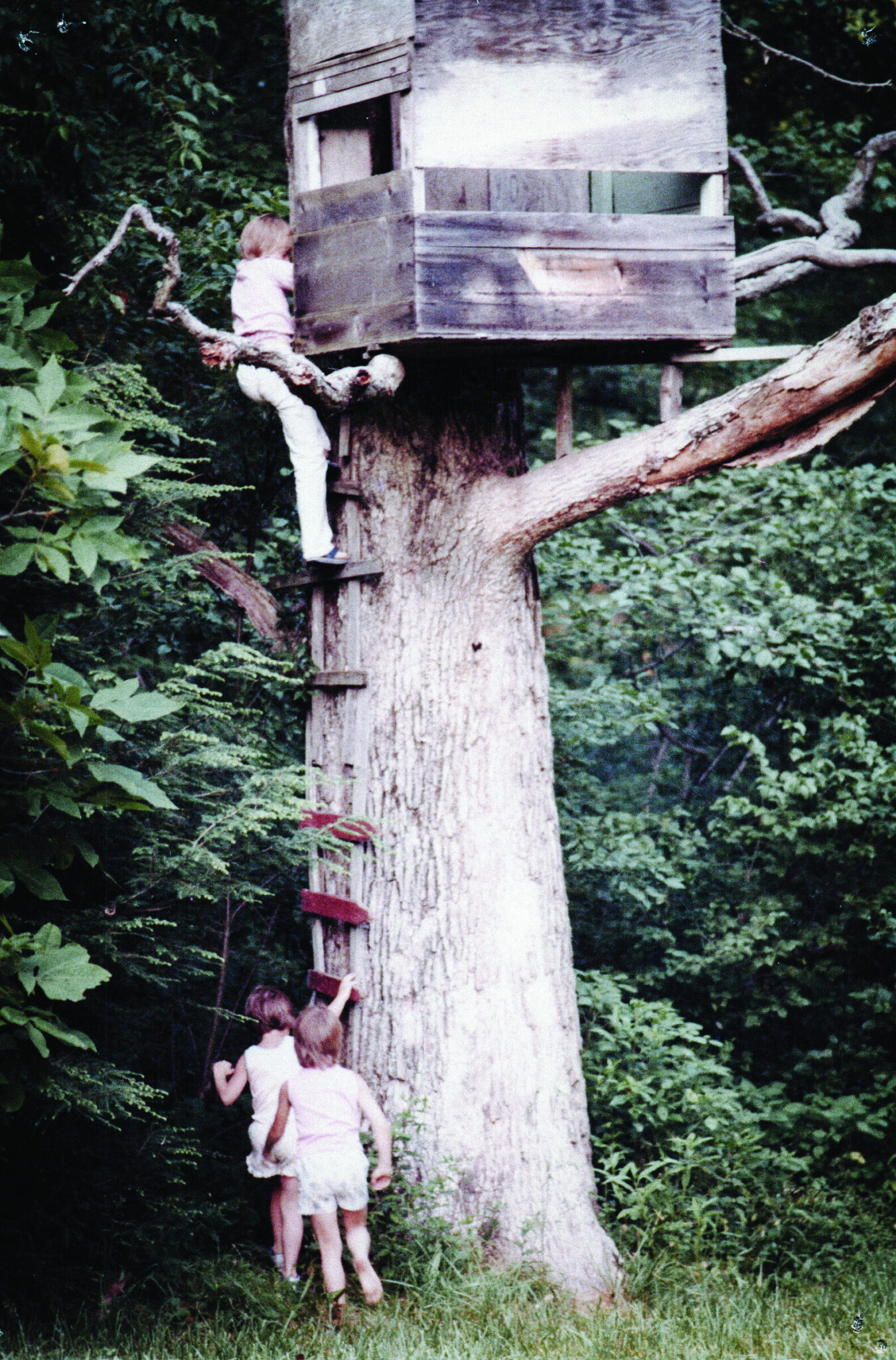
By high school, I was staying home to lifeguard and hang with friends while my parents continued to spend most of the summer in Pennsylvania. I’d lost interest in going, my vision elsewhere, but still I took comfort knowing the place was there, and after college, when I moved from Virginia to Vermont, it served as an overnight touchdown, a kind of airlock before I left the only home I’d known. A year later, when I accepted a job in California and moved again, it was the last stop before I headed west to another life, never to return to the old.
Late October, six years later. I was preparing for a two-week trip to Mexico to climb and ski the volcano Citlaltépetl, at 18,491 feet the third-highest peak in North America, acclimating during Día de los Muertos festival. Four days before leaving, my mother rang with the news that my aunt had died. I scrambled to get a flight for the next day, landed in D.C. that night, and got to PA in the early morning just 36 hours after I’d gotten the news. I woke up, went to her funeral, went to her burial, went to a gathering. Then I got in the car to drive back to D.C. and the last thing I did before heading south was make a tour of my old haunts. I didn’t know when I’d come back. I didn’t know if I’d come back.
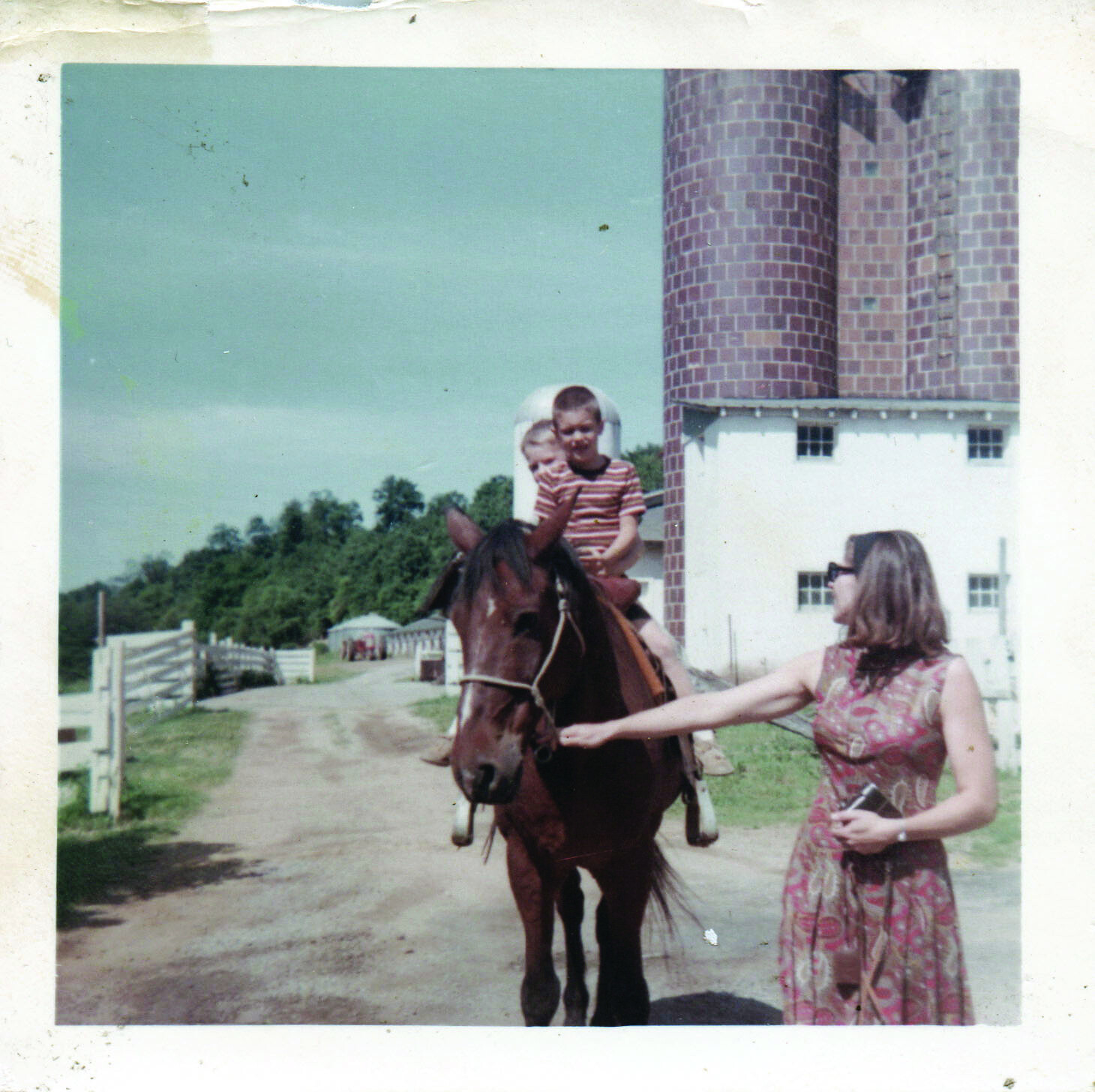
The place was locked up tight, the shades drawn–my parents were staying at my aunt’s—and I drove right past without going across the bridge, without even slowing, then I drove past my uncle’s farm, now owned by someone else, and then I stopped at the tiny church graveyard where my aunt was laid to rest. Stalks of tall grass peeked over the crumbling and lichened stone wall. Fireflies gathered with me to watch the sunset. Yeah, I thought. this could be my place.
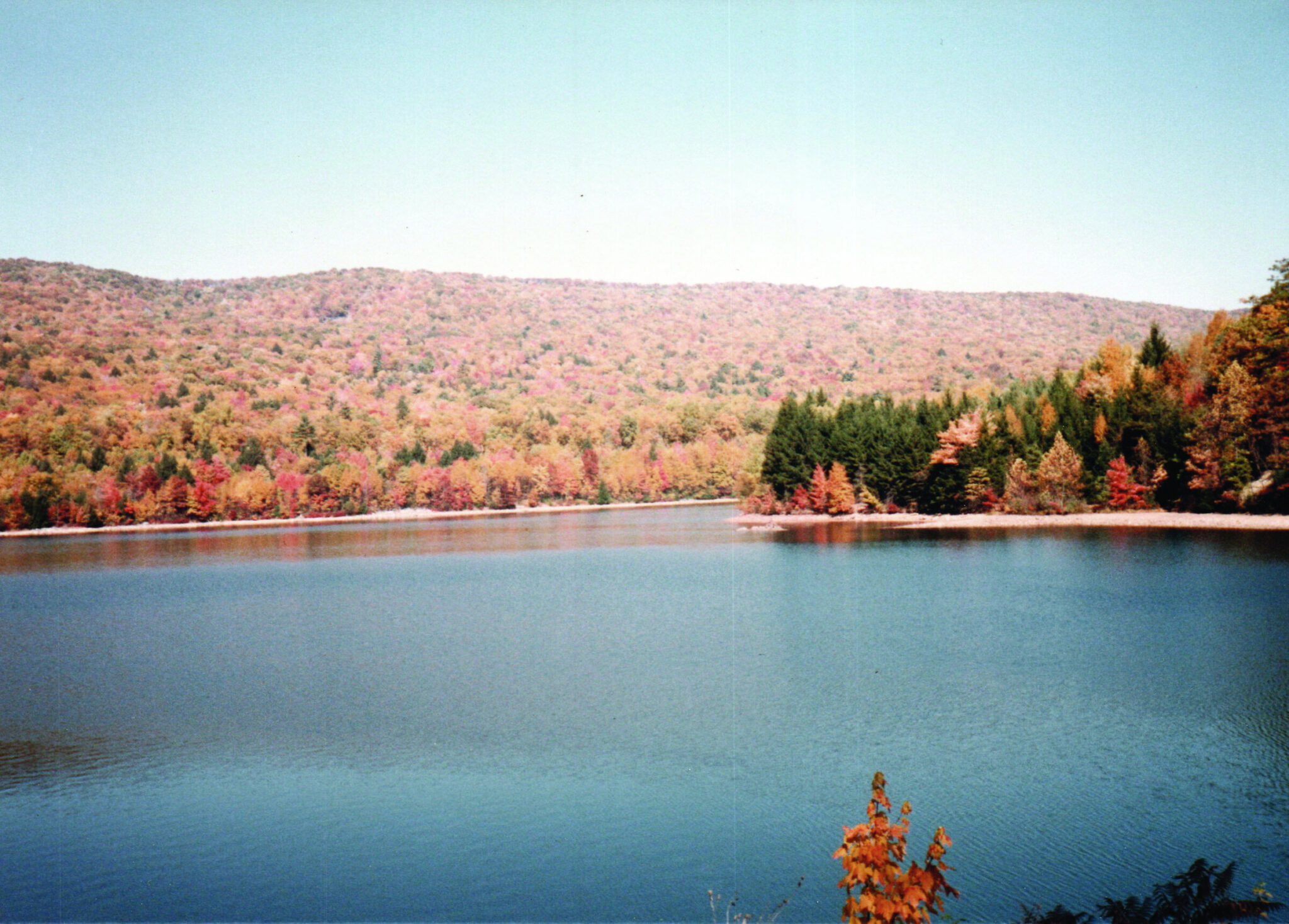
I drove higher into the mountains, to the reservoir where I’d spent so many hot summer days cooling in its lakey waters, jumping off its bridge and scurrying from snapping turtles. I stayed until dusk and then until the stars came out, and when I went to leave I took the long way, piloting the car back along Dark Woods Road, past our place. At the thickest section of trees, I reached down, flicked off the headlights, and coasted in a pool of ink. I turned them back on, but just as quickly turned them off again and let the darkness settle as I glided. It was fine. I was okay. I knew right where I was.